


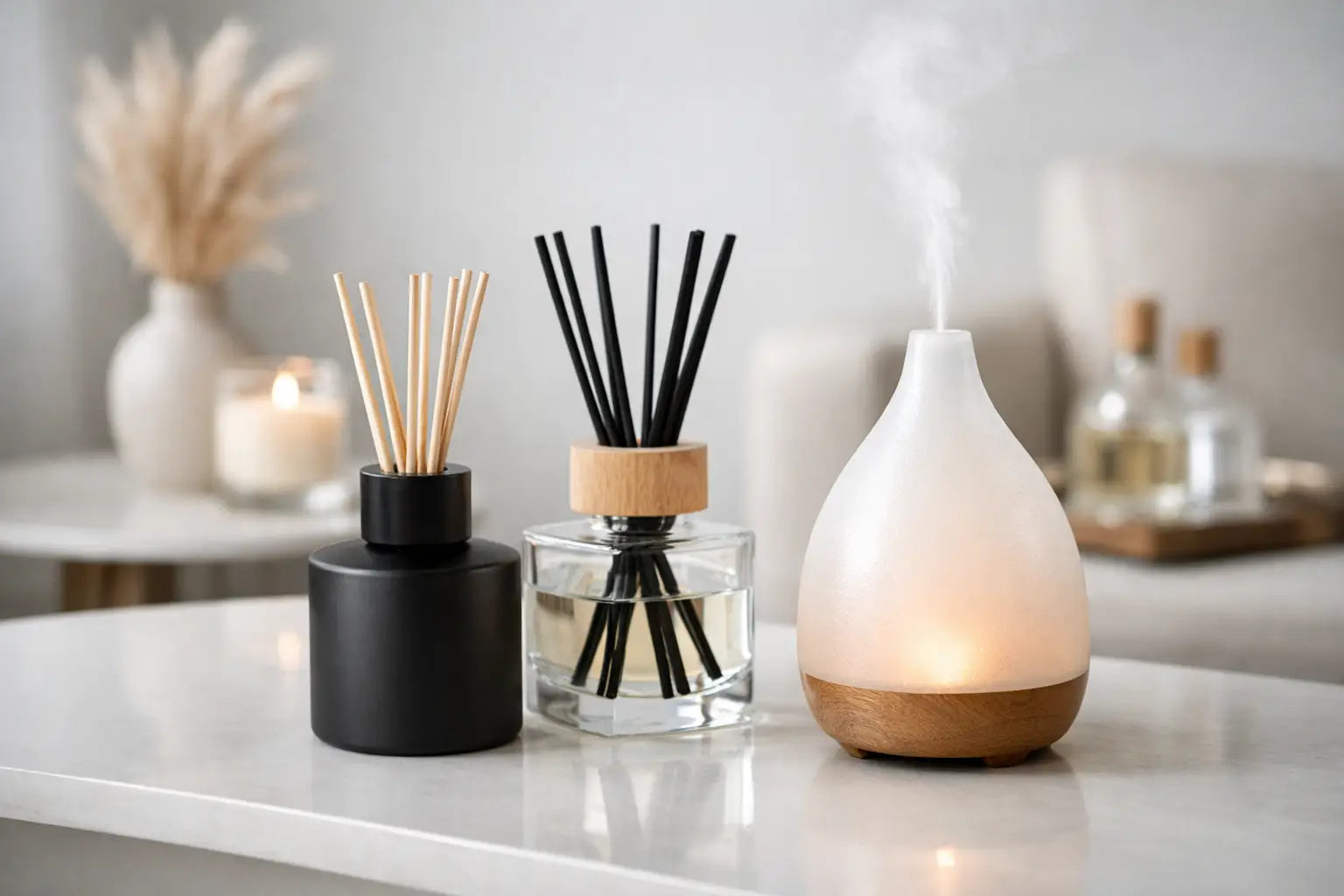
A beautiful room can still feel unfinished until it has a scent of its own. That is why luxury home diffusers UK shoppers return to are rarely chosen as an afterthought. They are selected with the same care as lighting, textiles and ceramics, because fragrance shapes atmosphere just as powerfully as colour, texture and form.
In a well-considered home, scent is not there to overwhelm. It should soften the edges of a room, linger quietly in the background and create a mood that feels personal rather than performative. The difference between an ordinary diffuser and a truly luxurious one often comes down to restraint, material quality and how naturally it belongs within the interior.
What defines luxury home diffusers UK homeowners admire?
Luxury, in this category, is not simply a heavier bottle or a higher price. It begins with composition. A refined diffuser has depth - top notes that greet the room gently, a heart that gives character, and a base that remains elegant as the hours pass. Cheap fragrance often announces itself quickly and then turns flat or synthetic. Better blends evolve with subtlety.
The vessel matters too. In elevated interiors, a diffuser is visible decor. It sits on a marble tray in a hallway, beside stacked books in a sitting room, or near hand towels in a guest bathroom. The glass, ceramic or stone should feel intentional, with proportions and finishes that belong in the home even before the reeds are placed inside.
Then there is longevity. A luxury diffuser should release scent consistently rather than aggressively for a week and then disappear. Many buyers assume stronger always means better, yet in practice the most expensive-looking room can be undermined by a fragrance that shouts. Soft diffusion with staying power is usually the finer choice.
The scent profiles that feel most elevated
Some fragrances immediately read as more sophisticated because they create atmosphere without becoming cloying. Woods, resins, fig leaf, citrus peel, neroli, amber, olive blossom and sea salt tend to work beautifully in British homes, particularly where the aim is calm elegance rather than novelty.
Floral scents can be exquisite, but they require discernment. Rose, orange blossom and jasmine are timeless when balanced with green, mineral or woody notes. When they are too sweet, they can feel old-fashioned or overly cosmetic. The same goes for gourmand scents. Vanilla, honey or almond may suit a dressing room or bedroom, though they can become heavy in a central living space.
If your interiors lean Mediterranean, layered fragrances with sun-warmed herbs, bergamot, cedarwood or soft musk often feel most natural. They echo stone, linen, washed wood and handcrafted surfaces. In that setting, the fragrance becomes part of the architecture of the room rather than a separate decorative gesture.
Matching scent to room, not just taste
One of the more common mistakes is choosing a single favourite fragrance and placing it everywhere. A home feels more nuanced when each room has its own mood. In an entrance hall, citrus, green tea or neroli creates freshness and polish. In a sitting room, woods, fig or amber offer warmth and quiet sophistication.
Bedrooms usually suit softer notes - white tea, iris, linen, cashmere woods or delicate florals. Kitchens are trickier. Heavy sweet scents can compete awkwardly with food, so herbs, lemon leaf or understated botanical blends are often more graceful. Bathrooms can carry brighter profiles, but avoid anything too sharp or medicinal if the aim is luxury rather than clinical freshness.
Why materials and craftsmanship matter
In a premium home, objects are judged not only by appearance but by integrity. That applies to fragrance as much as furnishings. The finest diffusers tend to use better oils, more considered blends and vessels designed to endure visually long after the liquid is finished.
This is where artisan-led retail has a clear advantage over anonymous mass-market sourcing. Products with provenance carry a different sort of value. The bottle feels less disposable, the scent more carefully edited, and the entire object more in keeping with a home built around pieces of meaning. For buyers who care about heritage and curation, a diffuser should sit comfortably beside hand-thrown ceramics, woven textiles and carved stone, not feel like a generic add-on from a department store aisle.
Reeds are worth noticing as well. Thick natural reeds usually diffuse more beautifully than poor-quality synthetic ones, although it depends on the oil base. Some high-end designs use fewer reeds for a cleaner look and gentler scent throw. Others prioritize stronger diffusion for larger spaces. Neither is inherently right. It depends on the room and your tolerance for fragrance.
How to choose luxury home diffusers UK interiors can carry well
British homes vary enormously, and scent behaves differently in each one. A high-ceilinged Georgian drawing room, a modern London flat and a coastal cottage in Cornwall will not hold fragrance in the same way. Temperature, airflow, room size and soft furnishings all affect performance.
If your room is large or open-plan, a diffuser alone may not create enough presence unless it is generously sized. In those spaces, choose a fuller composition with stronger base notes or consider placing more than one diffuser at different points in the room. In smaller rooms, less is often more. A concentrated scent in a compact cloakroom can become oppressive very quickly.
Styling also matters. Place diffusers where air can circulate, but not directly beside a window, radiator or draughty doorway, as the liquid may evaporate too fast. A diffuser on a bedside table should be more restrained than one in a hallway console arrangement. In family homes, placement should also be practical - elegant, yes, but not precarious.
The visual language of a diffuser
The most compelling luxury diffusers are chosen as design objects. A smoked glass vessel may suit a moody library or formal sitting room. White ceramic belongs naturally in a bathroom of limestone and cotton. Amber glass, hand-finished porcelain or stone-effect containers often work especially well in layered interiors because they bring depth without glare.
Look for bottles that converse with the room. If your home includes artisan copper, veined marble, natural linen or patterned ceramics, the diffuser should feel equally considered. This is one reason many discerning buyers prefer edited collections over endless choice. Curation protects the atmosphere of the home.
When price is worth it, and when it is not
A higher price can reflect finer ingredients, stronger aesthetic value and better diffusion, but not always. Some luxury branding relies heavily on packaging and little else. Others invest in fragrance complexity, artisanal production and vessels worthy of display. The distinction becomes clear after a few weeks of use.
Pay more when the scent remains elegant over time, the object genuinely enhances the room and the craftsmanship is evident. Be more sceptical when the fragrance is one-dimensional, the branding is louder than the blend, or the bottle looks expensive but feels oddly characterless.
There is also the question of refillability. For many buyers, this is where luxury begins to feel modern rather than merely indulgent. A beautiful vessel designed to be refilled respects both the object and the home. It encourages continuity, which is often what sophisticated interiors are built on.
Creating a scented home that feels curated
The most inviting homes do not smell like a showroom. They smell inhabited, composed and quietly memorable. That usually means resisting excess. One signature fragrance in a principal room, supported by lighter complimentary notes elsewhere, feels more elegant than a different bold scent in every corner.
Think in layers, as you would with textiles. An entrance hall might open with citrus and olive leaf. The sitting room could soften into fig, cedar or amber. A bedroom might hold white florals, iris or clean musks. The transition should feel graceful, not theatrical.
For those drawn to meaningful design, fragrance deserves the same level of discernment as any heirloom object. At Casa Serena Living, that philosophy sits naturally within a home shaped by artisan detail, Mediterranean poise and pieces chosen for their soul as much as their beauty.
The right diffuser does more than scent a room. It leaves an impression of taste, care and atmosphere - the kind guests remember long after they have gone home.


