


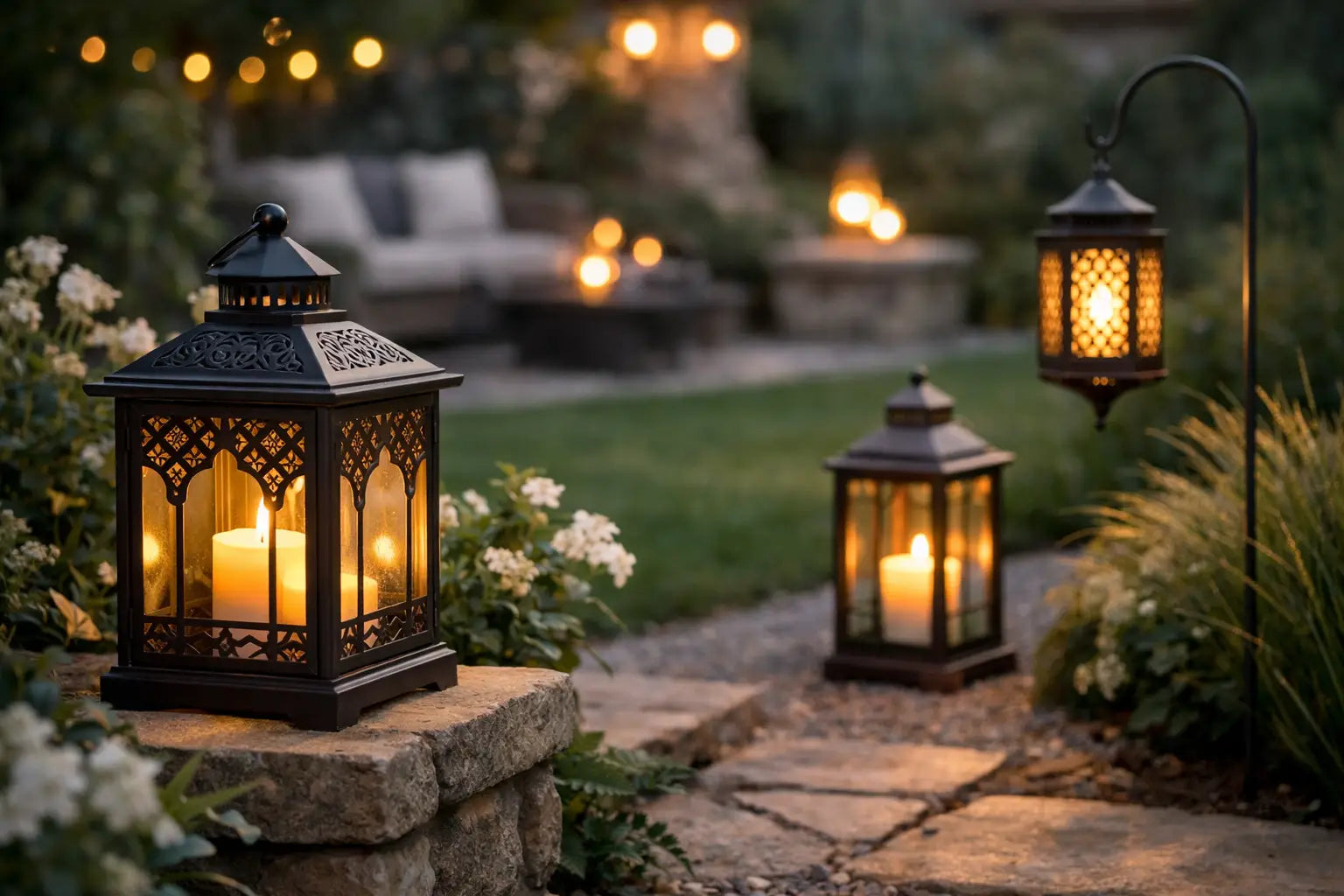
A garden after sunset can feel either flat or unforgettable. The difference is rarely excess. More often, it is the quality of the light, the material it passes through, and the object that holds it. Artisan garden lanterns do more than illuminate a path or table. They soften stone, deepen foliage, and give an outdoor space the composed, collected feeling of a home that has been shaped with discernment.
For those who care about provenance as much as appearance, the lantern matters in daylight as much as it does at dusk. A hand-worked metal frame, irregular pierced detailing, mouth-blown glass, a patina that will only become more beautiful with time - these qualities carry a presence that machine-finished pieces rarely achieve. In a considered garden, lighting should not feel like an afterthought. It should feel chosen.
Why artisan garden lanterns feel different
There is a particular intimacy to handmade outdoor lighting. You notice it first in the small variations: a slightly uneven hammered surface, the character of hand-cut perforations, the way coloured glass catches the final minutes of evening sun before the candle or bulb is even lit. These are not flaws. They are evidence of touch, and touch changes the emotional register of a space.
Mass-produced lanterns tend to aim for neutrality. They are designed to fit anywhere and therefore say very little. Artisan pieces do the opposite. They introduce memory, region and craft into the garden. A lantern inspired by Anatolian metalwork or Mediterranean courtyard living does not simply provide light. It brings with it a whole visual language of hospitality, ritual and slow summer evenings.
That is also why these pieces suit homes that are curated rather than merely furnished. They speak quietly, but with authority. Against limewashed walls, old timber, travertine, terracotta pots or clipped olive trees, they look settled rather than staged.
Materials that shape mood and longevity
Not all artisan lanterns are made for the same setting, and material choice matters more outdoors than many buyers expect. Brass and copper offer warmth and a rich glow, especially when used near dining areas where candlelight is part of the atmosphere. They age beautifully, though they do ask for acceptance of patina. If you want a finish that remains pristine with little change, these may not be your preference. If, however, you appreciate objects that record time elegantly, they are hard to rival.
Iron has more gravity. It can feel architectural and grounding, particularly in larger gardens or on stone terraces where a lighter material might disappear. Powder-coated finishes help with resilience, but the beauty of handcrafted iron often lies in its texture, and texture outdoors always means balancing protection with authenticity.
Glass is equally decisive. Clear glass gives the cleanest light and suits more contemporary schemes. Coloured or lightly tinted glass creates atmosphere faster, especially in courtyards and enclosed gardens where reflections matter. The trade-off is practical: coloured glass is more expressive, but it casts a softer and sometimes less functional light. If your priority is ambience, that is an advantage. If you are lighting steps or a route, clarity may be wiser.
Choosing artisan garden lanterns for your space
The right lantern is not simply the prettiest one. Scale, placement and the feeling of the space should lead the decision.
In a compact urban garden or roof terrace, oversized lanterns can dominate. Here, a pair of medium pieces placed low beside a bench or flanking a small café table often feels more graceful than one large statement object. In wider gardens, larger lanterns help anchor outdoor rooms, especially when grouped near built-in seating, a pergola or the threshold between indoors and out.
Consider the architecture of the house as closely as the planting. A Georgian exterior may favour restraint and symmetry, while a coastal Mediterranean setting can carry more texture, pierced metalwork and glowing glass with ease. If your home already has expressive surfaces - patterned tiles, aged stone, painted shutters - the lantern should converse with them rather than compete.
There is also the question of purpose. Some lanterns are decorative first, practical second. Others genuinely help define circulation and make a terrace usable long after sunset. Neither is superior, but clarity matters. If you want to read outside, serve supper comfortably or light steps for guests, choose pieces with enough scale and openness to cast a meaningful glow. If the goal is mood, smaller pools of light often feel more luxurious than broad illumination.
Where placement changes everything
Lanterns are most compelling when they create rhythm. A single piece can be lovely, but a considered sequence has more impact. At an entrance, two lanterns can frame arrival with quiet ceremony. Along a path, spacing them too evenly can feel rigid; slight irregularity often feels more organic, as though the light has been gathered rather than installed.
Dining areas benefit from lanterns at varied heights. One on the table, another on the ground nearby, perhaps a third on a low wall - this layering flatters faces and softens the hard edges that outdoor spaces sometimes acquire at night. Around water, glass and metal become even more expressive, though placement should be deliberate to avoid glare.
If wind is common in your garden, candle lanterns need sheltered positions. This is where form matters as much as beauty. More enclosed designs are practical, while highly openwork styles produce exquisite patterns but may be less dependable in exposed spaces.
Candlelight or wired lighting?
This depends entirely on how you live outdoors. Candlelit lanterns offer romance that electric light rarely matches. The movement of the flame, the imperfect glow, the sense of occasion - all of it contributes to a more soulful atmosphere. For dinners, late drinks on the terrace, or a quiet garden corner beside jasmine or lavender, candlelight remains unmatched.
But there are compromises. Candles require maintenance, relighting and a degree of attentiveness. In hospitality settings or family gardens used frequently, wired or rechargeable options can make more sense. They provide consistency and ease, especially where safety and convenience are part of daily use.
The most beautiful outdoor spaces often use both. Electric light handles function. Artisan lanterns provide character. When those roles are understood, the garden avoids the common mistake of trying to make one source of light do everything.
The decorative power of heritage craftsmanship
What distinguishes artisan lighting at the higher end is not ornament for ornament’s sake. It is the relationship between craft tradition and contemporary living. Hand-pierced lanterns rooted in Turkish metalwork, for instance, carry centuries of decorative intelligence. The motifs were never arbitrary. They were designed to filter light, animate surfaces and create intimacy.
In a modern British garden, that heritage feels especially compelling because it brings warmth to spaces that can otherwise become overly disciplined. Formal landscaping, expensive paving and immaculate planting all benefit from an object that introduces a human note. A lantern made by hand tempers perfection. It adds soul.
This is where discerning buyers often recognise the difference between trend and permanence. Trend-led outdoor décor chases a seasonal look. Heritage craftsmanship gives a space depth. It suggests that what fills the garden has been chosen with cultural curiosity and an eye for legacy, not simply convenience. That distinction is subtle, but it is precisely what elevates an outdoor scheme.
Caring for pieces that are meant to endure
Luxury outdoors should never mean preciousness, but it should mean attentiveness. Artisan lanterns will last longer and age more beautifully when they are treated as crafted objects rather than disposable accessories. Wipe metal surfaces gently, avoid harsh chemical cleaners, and bring more delicate pieces under cover during prolonged winter rain or frost.
Patina is not damage. It is often part of the appeal. The question is whether you want the lantern to look newly polished or gracefully lived with. Both are valid, but the choice should be intentional. Buyers who understand handcrafted décor usually come to value that mellowing of surface as part of the object’s story.
For covered terraces and garden rooms, the possibilities widen further. More intricate finishes, finer glasswork and delicate detailing become easier to maintain, which makes these spaces ideal for investing in exceptional pieces. In such settings, artisan lighting becomes less a garden accessory and more an extension of the home’s interior language.
A well-chosen lantern does not shout for attention. It waits for dusk, then reveals why it belongs. In that moment, the terrace feels softer, the planting more architectural, the evening more considered. If you are shaping an outdoor space that should feel intimate, cultivated and quietly unforgettable, choose pieces with a maker’s hand in them. Casa Serena Interiores understands that the most beautiful homes, indoors and out, are composed not only of objects but of atmosphere.


