


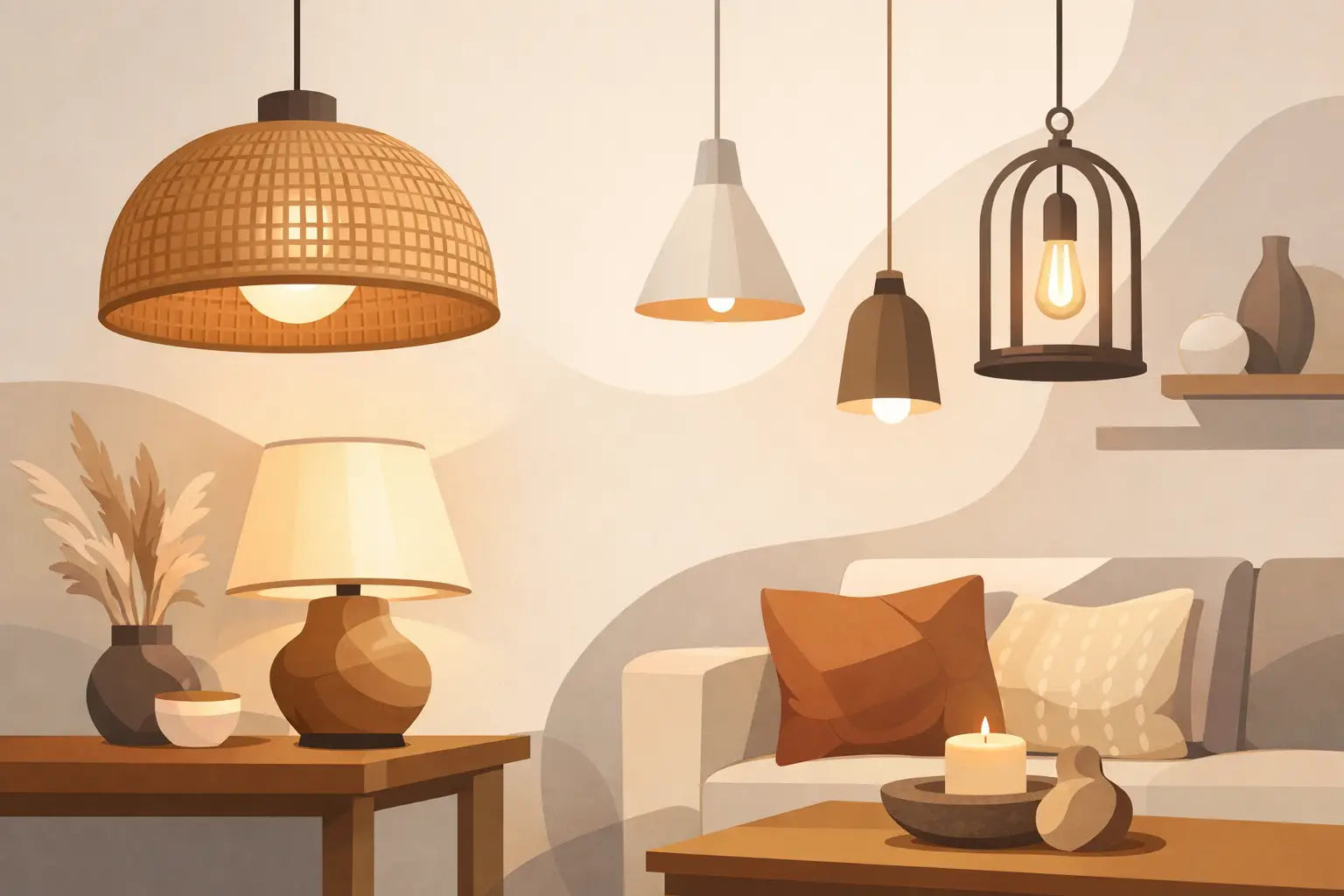
There are houses that are properly decorated and houses that, as dusk falls, reveal their true class. The difference is usually in the light. Handcrafted home lighting does not just illuminate a room: it defines its pulse, softens volumes, ennobles materials, and transforms the everyday into an intentional scene. When the piece has been worked by expert hands, that light also acquires a rare and valuable layer: provenance.
In contrast to the uniformity of mass-produced luminaires, a handcrafted lamp introduces visual texture, subtle noble imperfections, and a presence that does not need extravagance to impress. What others consider a functional accessory here becomes an aesthetic statement. It is not about filling a room with light points, but about choosing objects capable of sustaining the atmosphere of a home with personality.
Why handcrafted home lighting transforms a space
Craftsmanship has a different relationship with light because it originates from real material. Hammered copper reflects with depth, blown glass filters with nuances, and hand-worked ceramics project less predictable, more vibrant shadows. This richness is not always appreciated in a technical sheet but is evident in the daily experience of inhabiting a space.
There is an emotional dimension that should not be underestimated. A handcrafted lamp is not perceived as an interchangeable object. It has visual weight, a story, and its own rhythm. In Mediterranean-inspired interiors, where serenity depends as much on composition as on warmth, this difference is decisive. Light ceases to be merely a practical resource and begins to build intimacy, refinement, and memory.
There is also a more rigorous aesthetic argument: handcrafted pieces interact better with noble materials. Wood, linen, stone, kilims, decorative porcelain, or aged copper gain complexity when the lighting is not flat or harsh. A good handcrafted lamp does not compete with its surroundings; it reveals them.
What distinguishes a handcrafted piece from a merely decorative lamp
Not every lamp with a manual appearance is handmade. In the premium segment, the difference lies in the authenticity of the process, the quality of the finishes, and the relationship between form, material, and craftsmanship. A truly handcrafted piece usually shows a coherence that is impossible to fully imitate in mass production.
It is noticeable in the density of the metal, in the way an enamel reacts to light, in a hand-pierced design that projects irregular and elegant shadows, or in a patina that does not appear applied but earned. We are not talking about industrial perfection. We are talking about cultural exactness, about a beauty that retains the mark of the workshop.
In traditions such as Anatolian, handcrafted lighting has managed to combine ornamentation and sobriety with uncommon naturalness. The result is not frozen folklore, but pieces that can coexist with contemporary, classic, or Mediterranean interiors without losing their visual authority. This is where their strength lies: they have history, but they are not trapped in it.
How to choose handcrafted home lighting for each room
The best choice depends less on trends and more on the emotional function of the space. In the living room, light should envelop. Pieces with a sculptural presence, but with a warm and contained emission, are suitable. A worked copper pendant lamp or an artisanal ceramic table lamp can anchor the room without making it rigid. If the space already features rich rugs, patterned textiles, or furniture with a strong personality, the lamp should provide a counterpoint, not an excess.
In the dining room, lighting needs concentration and ceremony. A suspended piece above the table works best when it aligns with the furniture's axis and allows the overall setting to breathe. Here, both scale and height are important. Too high loses intimacy; too low interrupts visual conversation. Handcrafted luminaires with warm metal or textured glass often offer that balance between presence and delicacy.
The bedroom requires a different logic. The light must be enveloping, low, and serene. Nightstands benefit from lamps with a textile shade, a ceramic base, or handmade metal details that add character without disrupting the calm. In this context, craftsmanship should not feel solemn, but tactile and cozy.
In bathrooms and vanity areas, the criteria change. Functional light is needed, yes, but that does not mean sacrificing beauty. Clean-lined artisanal sconces or small accents in glass and metal can elevate a space that is often resolved too utilitarianly. The same applies to an entryway: a single well-chosen piece can set the entire tone of the house from the first moment.
Scale matters more than it seems
One of the most frequent mistakes in sophisticated interiors is choosing a beautiful lamp that is insufficient for the volume of the space. Craftsmanship has such symbolic presence that it is sometimes confused with real visual anchoring capacity. A large entrance needs a piece that supports the height. A reading nook, on the other hand, appreciates intimacy and precision.
It is advisable to think of the lamp as part of the interior architecture. It is not alone. It converses with ceilings, textiles, decorative works, and voids. When the scale is correct, everything seems to settle naturally.
Materials that add depth and sophistication
If you are looking for a serene and durable aesthetic, materials matter as much as design. Handcrafted copper brings an almost liquid warmth. It reflects light with a depth that is particularly favorable at dusk and ages gracefully. Ceramic, on the other hand, introduces a more earthy and tactile presence. It works very well in bedrooms, consoles, and living rooms where a less obvious, more cultivated beauty is desired.
Hand-worked glass has another virtue: it captures light without hardening it. It can be ethereal or dramatic depending on its color, thickness, and finish. And textile details, when well executed, add a layer of indispensable softness in homes where luxury is expressed not by excess, but by balance.
However, the choice should not be made based solely on taste. In homes with abundant natural light, certain metals can intensify more than desired during the day. In small spaces, an overly dark material can weigh down the atmosphere if not compensated with light walls or light furniture. True sophistication always considers the context.
How to integrate handcrafted pieces without overdoing it
Handcrafted home lighting works best when treated as a collection piece, not as a decorative repetition. If every light point tries to tell its own story, the house loses its curated feel. In contrast, when one or two main luminaires set the tone and the rest discretely complement them, the result feels more high-end.
This is especially true in interiors with strong cultural references. An Ottoman-inspired lamp, a hand-woven kilim, and decorative ceramics can coexist with extraordinary elegance, but they require a curatorial eye. Not everything should be a protagonist at once. A refined home knows how to balance.
It is also wise to avoid the trap of the "perfect set." Craftsmanship shines brightest when it breathes. A unique lamp next to a contemporary table, a minimalist sofa, or a discreet whitewashed wall creates a beautiful tension between heritage and modernity. This well-resolved mix conveys a much more current luxury than a themed ambiance.
The light temperature: the detail that defines the ambiance
An exceptional piece can lose all its magic with an incorrect bulb. In homes seeking warmth, the light temperature should be soft. If it is too white, metals become cold, ceramics lose depth, and textiles flatten. Craftsmanship needs light that complements its material, not that questions it.
Dimmable intensity also makes a clear difference. It allows the same lamp to serve for welcoming guests, dining, reading, or simply slowing down at the end of the day. True domestic luxury is not always about having more, but about being able to nuance better.
The value of choosing objects with provenance
In a market saturated with correct but anonymous pieces, provenance matters again. Knowing the tradition from which a lamp originates, the techniques that sustain it, and the hands that made it changes the relationship with the object. One no longer just buys design. A cultural continuity is incorporated into one's own space.
This dimension is especially valuable for those who understand the home as a visual biography. It is not about accumulating exotic references, but about critically choosing pieces that bring truth, conversation, and permanence. In this sense, curatorial firms like Casa Serena Interiores have understood something essential: contemporary luxury does not need to shout when it has history.
Good lighting is not limited to making a house prettier. It makes it more livable, more intimate, more self-aware. If you are going to choose a handcrafted piece, do so calmly and with discernment. The right lamp not only accompanies domestic life: it ennobles it, night after night.


