


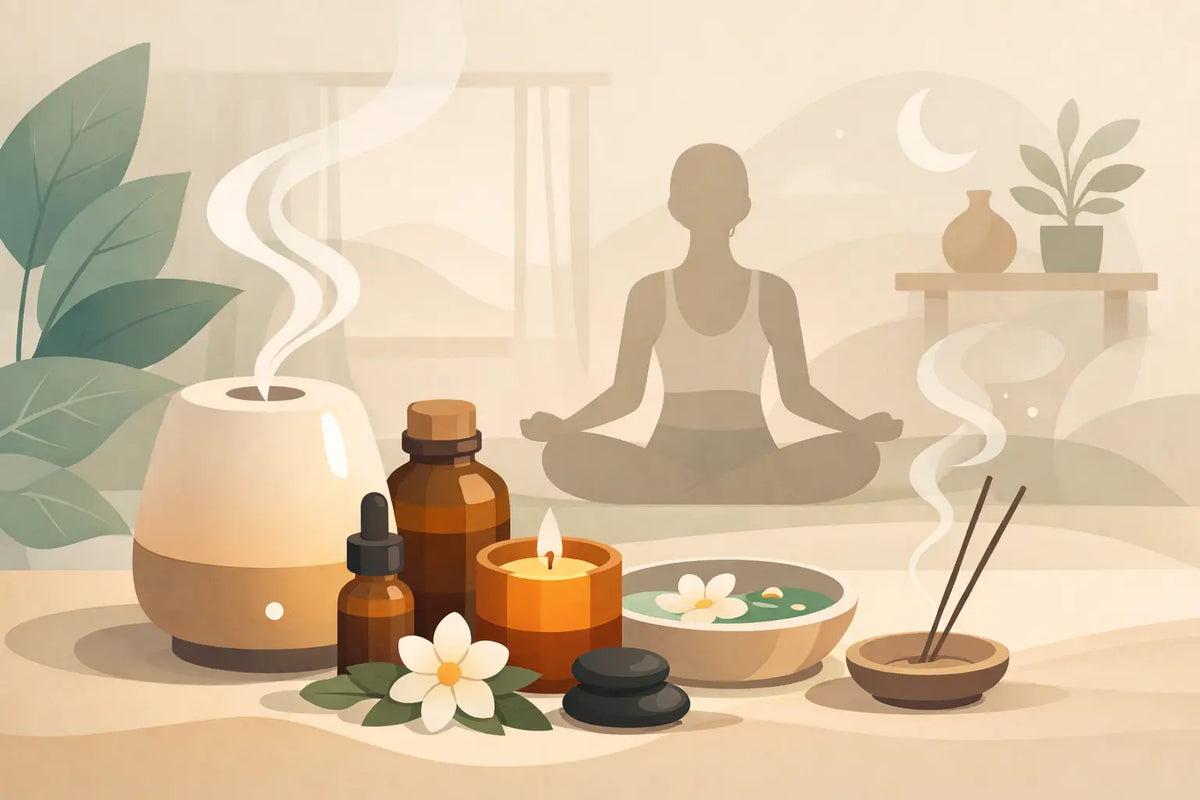
A memorable home isn't recognized only by what you see. It's remembered by the light that falls on a hand-woven rug, by the feel of washed linen, and by the aroma that greets you when you cross the threshold. Home aromatherapy rituals transform these everyday moments into a more intimate, more conscious, and deeply personal experience.
It's not about perfuming every corner until its identity is erased. True sensory luxury lies in choosing a fragrance with intention, giving it a beautiful holder, and allowing it to accompany the natural rhythm of the room. Like a handcrafted ceramic piece or an Aegean textile, a well-chosen scent speaks of sensitivity, memory, and discernment.
Scent as part of home architecture
Home aromatherapy works best when thought of like the rest of interior design: in layers. First, there's the material base of the space - woods, natural fibers, stone, copper, ceramics. Then, the light, textiles, and objects. The aroma completes the composition but shouldn't compete with it.
Therefore, before choosing an essential oil or candle, it's worth observing the room. A living room with kilims, dark woods, and glazed ceramics calls for warm notes like cedar, soft frankincense, bitter orange, or cardamom. A bedroom dressed in linen, cotton, and chalky tones usually appreciates lavender, neroli, or sandalwood in a contained dose. In the bathroom, eucalyptus and rosemary provide a crisp cleanliness without falling into impersonal hotel perfume.
The key is to avoid uniformity. Having the entire house smell exactly the same can feel flat and, in small spaces, overwhelming. It's preferable to create a delicate continuity: citrus and herbs in daytime areas; white florals, woods, and light resins in resting spaces. This way, each room retains its character without breaking the overall harmony.
Home aromatherapy rituals according to the moment
The best rituals don't require an hour of free time or a complicated setup. They arise from repeated gestures that signal a transition: starting the morning, coming home, preparing for rest. When aroma is associated with these moments, it ceases to be invisible decor and acquires emotional presence.
Morning: clarity without harshness
Open the windows for a few minutes, even in winter, and allow the air to refresh the room before turning on any diffuser. Then, add water to an ultrasonic diffuser and choose three or four drops of lemon, bergamot, or rosemary. The combination awakens without the aggressive intensity of certain synthetic fragrances.
Place the diffuser on a copper tray or a stone surface, never hidden among objects without air around it. A functional utensil can have a sculptural presence if integrated with intention. Alongside a cup of coffee, an olive branch, or a small ceramic bowl, this morning gesture acquires a quiet beauty.
If small children, pets, or people particularly sensitive to smells live in the house, reduce the amount and keep the room ventilated. Aromatherapy doesn't win by intensity: it wins by precision.
The return: leave the outside at the door
At the end of the day, the entryway deserves more attention than it usually receives. It's the first space that brings you back home and, therefore, the ideal place to establish a small arrival ritual. A vegetable candle with notes of fig, tea leaf, cedar, or mandarin can be lit for twenty or thirty minutes while you change clothes or prepare dinner.
The entryway doesn't have to be large. In fact, in a small space, a candle in a ceramic container, a handcrafted tray, and a warm light lamp are enough to create an atmosphere. Choose vegetable wax candles with cotton wicks and quality perfumes, and do not leave them burning unsupervised. The piece that holds the flame matters as much as the aroma: what others call an accessory, we call an everyday legacy.
For those who prefer not to use a flame, well-formulated reed diffusers can work well, as long as they are placed away from drafts. Flip a few reeds infrequently. A perfume that overpowers doesn't invite you to stay.
Afternoon: a pause that calms the mood
After-dinner conversation, reading, or the moment before guests arrive calls for enveloping, yet clean, aromas. Petitgrain, bergamot, and geranium create a sense of balance; high-quality frankincense adds depth to living rooms with Mediterranean aesthetics, especially when used sparingly.
A ceramic oil burner can be a particularly beautiful choice, though it requires more attention than an electric diffuser. Add water to the top bowl before incorporating two or three drops of essential oil and use a tea light underneath. Never burn pure oil or allow the water to evaporate completely, as the aroma becomes harsh and the container can be damaged.
This is a good time to accompany the perfume with a physical action: tidying a side table, folding a cotton blanket, placing fresh flowers in a jug. The ritual isn't about consuming more objects, but about looking anew at those that already make the house your own.
Night: prepare for true rest
The bedroom doesn't need a cloud of perfume. It needs a subtle signal to help slow down. Lavender remains an excellent choice, but it gains sophistication when mixed with Roman chamomile, cedar, or a faint note of neroli. Use the diffuser for fifteen or twenty minutes before bed and turn it off when you get into bed.
Another alternative is to lightly perfume textiles. Mix distilled water with a small amount of lavender hydrosol in a spray bottle and apply it from a distance to the bedspread or curtains. Always test in an inconspicuous area first: silks, delicate fabrics, and some hand-dyed fibers may react poorly to moisture or oils.
Avoid applying essential oils directly to pillows, skin, or bedding without proper dilution. Natural does not automatically equate to harmless. In case of pregnancy, asthma, allergies, epilepsy, or medical treatments, it's advisable to consult a healthcare professional before using certain oils.
Choosing the holder: beauty, material, and safety
The way an aroma is diffused completely changes the experience. An ultrasonic diffuser offers control and works well for brief rituals. Candles provide intimacy and light but require vigilance. Reed diffusers are discreet and constant, though more suitable for well-ventilated and not-too-large rooms. A traditional burner has a ceremonial presence but demands more care.
Where each piece is placed also matters. On a wooden console, protect the surface with a tray. In the bathroom, prefer glazed ceramic or treated metal to resist moisture. On a table with handcrafted textiles, keep any flame at a sufficient distance. Sophistication is not at odds with prudence: a well-composed home cares for its inhabitants and the objects it treasures.
Essential oils deserve the same scrutiny as other materials entering the home. Look for clear information about the plant of origin, extraction method, and composition. A very low price often reveals dilutions or low-quality fragrances. Authentic rose oil, for example, is costly due to the enormous amount of petals required; responsibly sourced sandalwood will also not be a minor purchase. Less variety, better chosen, is often the most elegant decision.
An olfactory palette with a Mediterranean identity
Building a small collection of aromas allows for variety without accumulating. For a home with a Mediterranean sensibility, four well-selected families are sufficient: citrus like bergamot, lemon, and bitter orange; herbaceous like rosemary, thyme, and lavender; sober florals like neroli and geranium; and warm bases like cedar, sandalwood, or frankincense.
Blends can be simple. For a bright morning, bergamot and rosemary. For a serene living room at dusk, bitter orange and cedar. For a bathroom reminiscent of a contemporary hammam, eucalyptus and a hint of mint, without overdoing it. For the bedroom, lavender and Roman chamomile. Always start with a few drops and adjust in the following days: the sense of smell needs space to perceive nuances.
At Casa Serena Interiores, we understand the home as a collection of lived scenes, not as an immobile showroom. A copper tray, a ceramic bowl, and a carefully chosen aroma can transform an ordinary gesture into a moment of presence.
Allow each fragrance to have a reason to be there. When the house smells of what you have consciously chosen, well-being ceases to be an abstract promise and becomes a silent way of returning to yourself.


