


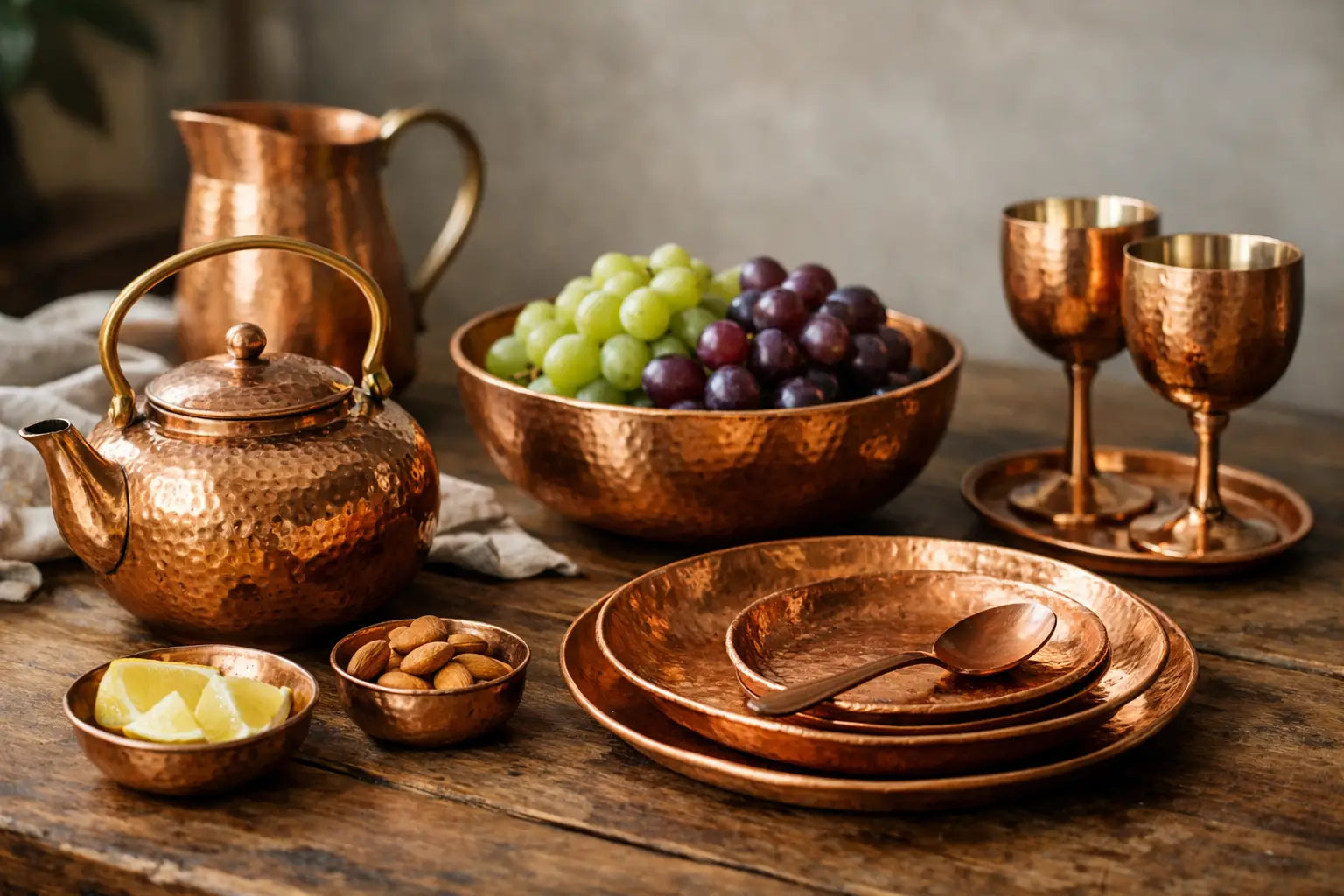
There is a particular moment, just before guests sit down, when the table either feels considered or merely arranged. Handmade copper serveware changes that moment. It catches candlelight, deepens the richness of food, and gives even a simple supper the quiet confidence of a home that has been shaped with intention.
What makes handmade copper serveware so compelling
Copper has always belonged to the language of hospitality. In Turkish homes and across the Mediterranean, it has long been used not only for cooking and serving, but for creating atmosphere - a sense of abundance, warmth, and generosity expressed through material. When that copper is formed by hand, the effect is altogether different from anything factory-made.
You can see it in the gentle irregularity of a hammered surface, in the way the rim is finished, in the slight distinctions that prove a maker's hand was present from first strike to final polish. These are not flaws. They are the marks of life within the object. For discerning buyers, that visible human touch is precisely the point.
Handmade copper serveware also occupies a rare position between utility and ornament. A tray can carry coffee in the morning and become a centrepiece by evening. A lidded dish can hold warm appetisers, then rest on a sideboard as a decorative accent with equal ease. Few materials move so gracefully between service and display.
The difference between artisan copper and mass-market pieces
At a distance, many copper items can appear similar. Up close, the distinctions become unmistakable. Mass-market serveware often aims for uniformity above all else. It is polished to sameness, stripped of character, and made to satisfy a trend rather than outlast it.
Artisan work tells another story. The weight feels more substantial in the hand. The proportions are often more elegant. Hammering has rhythm rather than repetition. There is usually a sense of balance that comes from experience rather than machinery. In well-made pieces, beauty is inseparable from function.
This matters if you are furnishing a home with care. When every object is anonymous, a room can feel expensive yet empty. Handmade pieces bring authorship into the space. They suggest discernment. They imply that the person who chose them values provenance as much as appearance.
For this reason, handmade copper serveware appeals not only to those who love to host, but also to collectors, stylists, and boutique hospitality buyers who understand that atmosphere is built through details. A serving tray, bowl, or coffee set may seem like a small decision, but these are often the objects guests remember.
Handmade copper serveware in a modern interior
One of copper's greatest strengths is its warmth. In interiors that lean natural, coastal, or Mediterranean, it introduces a glow that softens stone, linen, wood, and ceramic. In more minimal spaces, it acts as a point of contrast - adding texture and soul without disrupting restraint.
This is especially true when the finish is not overly bright. Handmade copper with a mellow sheen feels cultivated rather than flashy. It sits beautifully beside marble countertops, limewashed walls, walnut dining tables, and woven textiles. It also pairs surprisingly well with porcelain and patterned ceramics, where the metal anchors more decorative surfaces with a sense of gravitas.
There is also an emotional quality at work. Copper has memory. It patinates, responds to touch, and changes over time. For some, that evolution is part of its seduction. Others prefer to preserve a high shine. Neither approach is wrong. It depends on whether you want your serveware to remain ceremonious or to grow visibly lived-in.
How to choose the right pieces for your table
The best choice is rarely the largest or most ornate piece. It is the one that fits the way you actually live and host. If you entertain often, start with foundational forms: a serving tray, a bowl for shared dishes, and one or two smaller pieces that can hold sweets, nuts, olives, or bread. These create an immediate sense of cohesion without asking the table to become theatrical.
If your style is quieter, look for restrained silhouettes with fine hammering and clean edges. If you prefer a more layered, expressive table, decorative engraving or shaped handles may feel more at home. In both cases, scale matters. Oversized serveware can overwhelm an intimate table, while pieces that are too slight may disappear among linens, glassware, and platters.
It is also worth considering what will sit around the copper. Warm whites, deep greens, tobacco tones, and mineral blues all complement it beautifully. A table set with handmade linens and ceramic plates gains depth when copper is introduced sparingly. Too much can feel heavy. Just enough feels composed.
Care, patina and the beauty of use
People are sometimes drawn to copper but hesitate because they imagine it to be difficult. In reality, caring for handmade copper serveware is mostly a question of respect rather than complication. It rewards gentleness. Wash by hand, dry promptly, and avoid harsh abrasives that flatten the finish or disturb decorative detailing.
Over time, copper naturally darkens and develops variation. This is not deterioration. It is part of the material's character. Some owners adore that aged softness, especially in homes where every piece is intended to feel storied rather than pristine. Others prefer to polish occasionally to restore brightness for special gatherings. Both reveal something lovely.
The only real trade-off is that copper asks not to be treated as disposable. It is not for the cupboard of neglected entertaining pieces that only emerge once every few years. It wants to be handled, noticed, and integrated into domestic life. If that appeals to you, copper gives back generously.
Why provenance matters as much as polish
Luxury today is often mistaken for surface perfection. Yet for many of the most thoughtful buyers, true luxury lies in origin. Who made it, where it was made, and whether the object carries cultural integrity have become as important as finish or price.
That is why artisan copper from Turkish workshops holds such enduring appeal. The tradition is not decorative nostalgia. It is a living craft, shaped by regional knowledge, inherited technique, and the discipline of repetition over many years. When you buy from a source that values direct relationships with makers, you are not simply purchasing serveware. You are preserving a chain of artistry that mass production steadily erodes.
For a home that seeks depth rather than display, this distinction matters. Provenance gives an object authority. It also gives the buyer confidence that beauty has not been manufactured in isolation from meaning.
A more memorable way to host
Entertaining is rarely about excess. The most beautiful tables often rely on a few exceptional elements chosen with restraint. Handmade copper serveware does exactly that kind of work. It adds lustre without noise, heritage without heaviness, and presence without needing explanation.
A bowl of figs looks richer in copper. Coffee feels more ceremonial when poured from a handcrafted pot. Shared dishes arrive at the table with greater generosity when the vessel itself suggests care. These are subtle shifts, but they alter how a meal is received. They slow the rhythm of hosting in the best possible way.
For those curating a home that feels collected rather than purchased in one sweep, copper is especially persuasive. It does not need to dominate the room. It simply needs to belong. And when it does, it lends that rare quality every refined interior is searching for - warmth with memory.
If you are choosing pieces that will live with you for years rather than seasons, consider the quiet authority of artisan copper. At Casa Serena Living, that is precisely the kind of beauty worth bringing to the table.


