


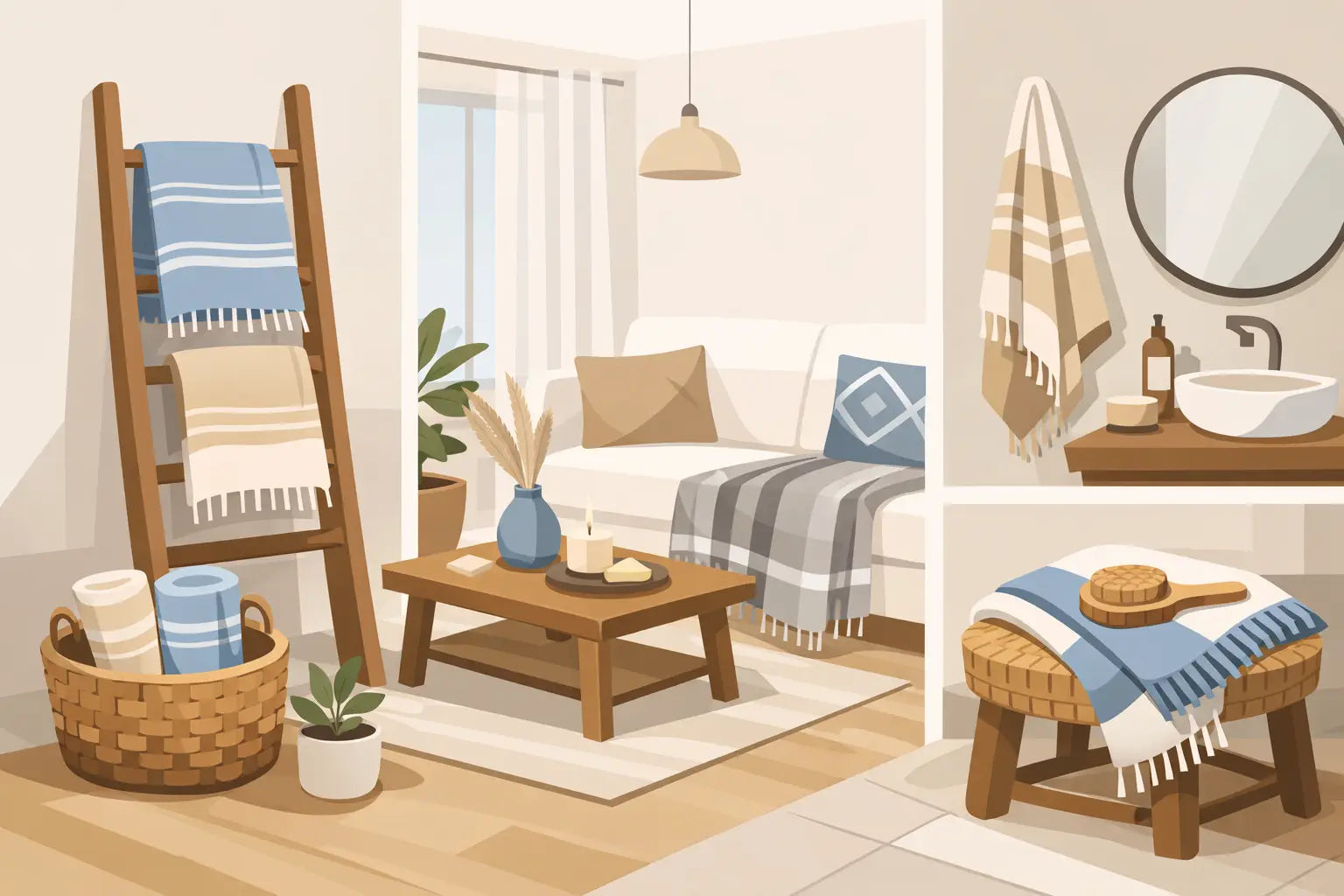
There are textiles that serve a function, and then there are those that change the atmosphere of a room. If you're wondering how to use peshtemal at home, the answer lies not only in its practical versatility but also in its ability to introduce lightness, texture, and a serene beauty that needs no excess to impress.
Born from the tradition of the Turkish hammam, the peshtemal is a cotton textile woven with a different logic than a conventional towel. It is lighter, dries quickly, takes up little space, and drapes with a naturalness that connects it as much to the world of wellness as to interior design. This is why it works so well in homes where every object must be useful, yes, but also say something about the person who chose it.
How to use peshtemal at home without limiting it to the bathroom
The most common mistake is to think of the peshtemal solely as a pretty towel. In reality, its value lies precisely in not staying there. Its flat weave, flexibility, and visual presence make it a transitional piece between the functional and the decorative.
In the bathroom, of course, it finds its most intuitive place. A well-chosen peshtemal offers a much more refined look than the thick, heavy towels that visually clutter the space. Hung on a bar, folded over a wooden bench, or arranged in a natural fiber basket, it introduces a sense of domestic spa that is difficult to achieve with bulkier textiles. Moreover, in small bathrooms or second homes, it is especially practical because it dries quickly and stores easily.
But where it truly reveals its sophistication is when it leaves the bathroom. On the bed, it can function as a lightweight transitional throw, especially in Mediterranean-aesthetic bedrooms where soft layers and fresh textures are desired. At the foot of the sofa, a peshtemal adds color and movement without the visual weight of a thick knit blanket. Even in a reading nook or a sheltered outdoor area, its presence provides a relaxed yet very thoughtful touch.
Where in the home it looks best
Not all textiles adapt to so many roles with the same elegance. The peshtemal does so because it doesn't impose. It accompanies. This discreet quality is precisely what allows it to be integrated into different spaces without appearing repetitive.
Bathroom: well-being with a lighter aesthetic
In the bathroom, the peshtemal has its own language. It speaks of ritual, cleanliness, slow time. If you seek a more refined atmosphere, it works best in neutral tones, dusty shades, or classic stripes. Off-whites, sand, grayish-blue, or soft terracotta elevate the space without making it rigid.
It's also worth considering the daily experience. Compared to the dense terry towel, the peshtemal offers less bulk and a more enveloping, fresh feel. Some prefer the plush embrace of a traditional towel in winter, and that is a legitimate preference. But for temperate climates, well-heated bathrooms, or routines closer to contemporary wellness, the peshtemal is often more comfortable than many imagine.
Bedroom: breathable layers
On the bed, the peshtemal doesn't necessarily replace a main blanket. Its strength lies in complementing the scene. Placed crosswise at the foot, it creates a light and sophisticated layer, perfect for breaking up overly flat or monochrome bedding. It can also be used over an armchair or upholstered bench to introduce a textile accent without overpowering.
Here the criterion is clear: the nobler and more understated the bedroom's palette, the better the quality of the fabric will be perceived. A peshtemal with fine stripes or discreet fringes tends to harmonize better with linens, light woods, artisanal ceramics, and natural fibers than an overly showy piece.
Living room: a style statement without stiffness
The living room calls for textiles that make the space cozy, but it doesn't always need bulk. A peshtemal resolves this tension very well. Folding it informally over the arm of the sofa, letting it drape over a chaise longue, or using it in a basket next to a kilim rug creates a lived-in and elegant look.
The key is not to treat it as a forced adornment. It should appear available, livable, part of everyday life. Refinement, in a discerning home, never seems like mere staging.
Terrace or garden: relaxed luxury
In covered outdoor areas or urban terraces, the peshtemal offers a clear advantage: it is lightweight, easily shaken out, and adapts to various uses. It can accompany a long meal, a sun lounger, or a cool evening at the end of summer. It is also ideal by a pool or in a holiday home, where lightness and quick drying make all the difference.
Of course, it should be protected from constant sun and prolonged humidity if you want to preserve its color and texture well. Like any quality textile piece, it appreciates some care.
How to choose the right peshtemal for each use
Understanding how to use peshtemal at home also means knowing how to choose it. Not all serve the same purpose, and therein lies one of the differences between impulse buying and selecting with a curatorial eye.
The first criterion is grammage. A very light peshtemal works wonderfully as a travel towel, for the hammam, the beach, or a decorative layer in summer. A slightly more substantial one offers better drape for the living room or bedroom and a more enveloping feel when used after a shower.
Then there's the material. Cotton remains the most balanced choice for softness, absorbency, and ease of maintenance. Some blends with linen provide a drier texture and a very refined aesthetic, though they may be less soft at first. It all depends on the effect you're looking for: immediate comfort or a more architectural textile presence.
Color deserves a conscious decision. If the house already has character, perhaps a peshtemal that complements rather than competes is best. If the space needs a contrasting note, traditional stripes or a more saturated tone can add life without being obvious. At Casa Serena Interiores, we advocate a simple idea: the best textile doesn't shout, it refines the ensemble.
The decorative value of a piece with history
Part of the peshtemal's appeal lies in its cultural origin. It is not a passing fad or an invention of contemporary styling. It is a textile with memory, linked to a tradition of bathing, hospitality, and body care that has spanned generations. When it enters the home, it brings with it that silent history.
This changes how it is used. It is no longer perceived as an interchangeable accessory, but as a piece with lineage. And that nuance matters a great deal in interiors of high aesthetic sensitivity. What others call decoration, we call legacy.
That is why it integrates so well into homes where honest materials, handcrafted objects, and a less rushed view of consumption coexist. A well-woven peshtemal does not need to justify its presence. It is enough to touch it, see it drape, observe how it ages.
Care and maintenance to preserve its beauty
One of its most pleasant advantages is that it does not require excessive complications. Even so, like any quality textile, it improves with proper care. It is ideal to wash it with gentle cycles, avoid overly high temperatures, and refrain from intense fabric softeners that can alter the fiber's absorbency.
With washing, many peshtemals gain body and softness. This evolution is part of their charm. They do not seek rigid perfection, but a lived-in beauty. The fringes may require some occasional attention, especially if used frequently in the bathroom or outdoors, but this is part of a more conscious relationship with well-made objects.
If you are going to use it daily, it is worth having more than one and alternating them. This way they better preserve their texture and you will always have a piece ready to dress a space or accompany a moment of rest.
The true secret of how to use peshtemal at home is not in finding a single perfect function, but in allowing this textile to naturally accompany life. In a serene bathroom, at the foot of the bed, or on a bright sofa, its presence recalls something essential: the most lasting luxury is almost always the one that seems simple.


