


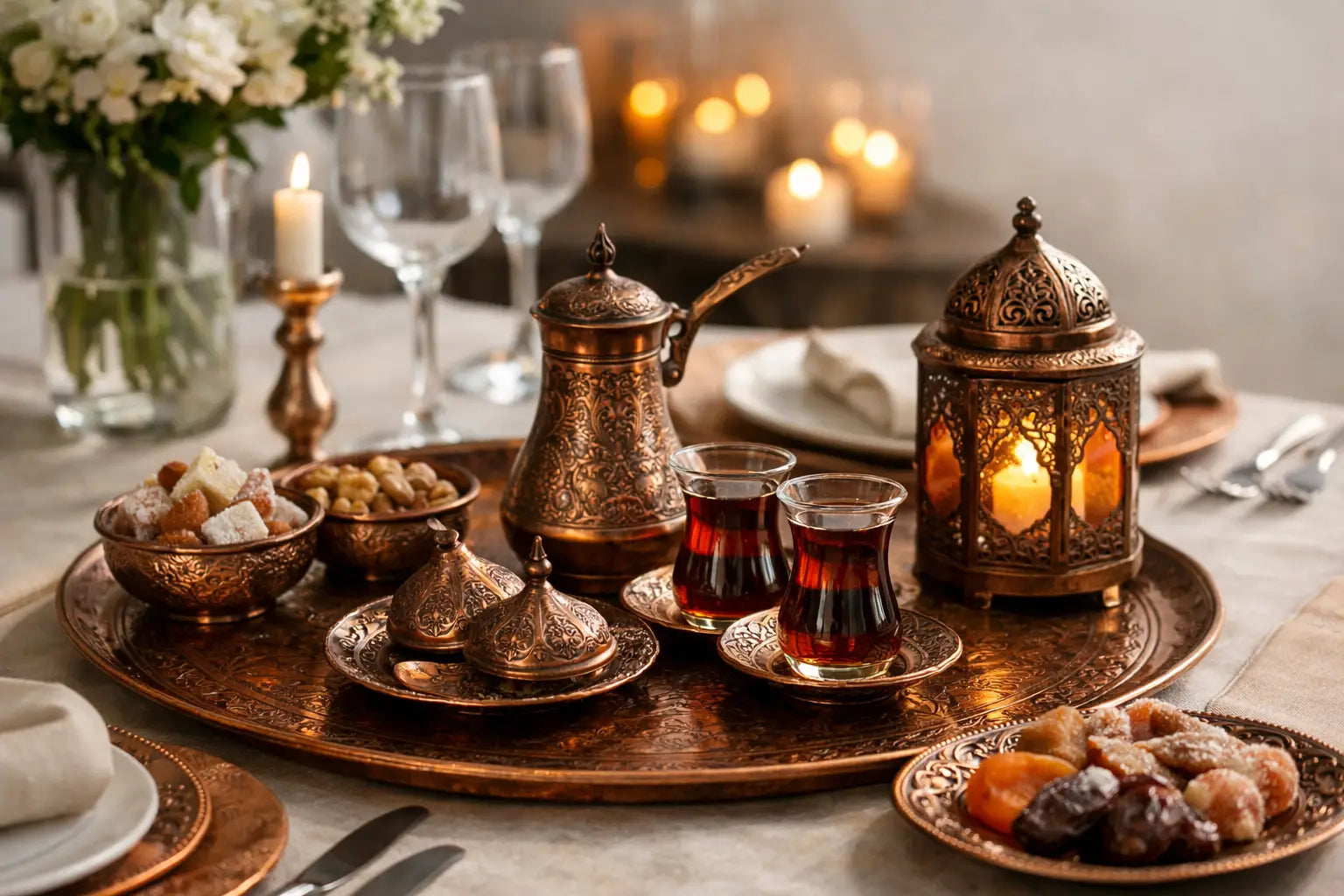
A beautifully set table is never only about dining. It is about atmosphere, memory, and the quiet confidence of a home that has been considered with care. If you are wondering how to style Turkish copper tablescapes, the answer begins not with excess, but with materiality: warm metal, soft linen, hand-finished ceramics, and the kind of light that makes every surface feel alive.
Turkish copper has a presence few materials can match. It reflects candlelight with a mellow glow rather than a hard shine, and it carries the visible touch of the maker in every hammered mark. In a Mediterranean-inspired interior, it feels both noble and welcoming - less formal than silver, more soulful than polished steel, and infinitely richer than anything mass produced.
Why Turkish copper changes the mood of a table
Copper brings warmth in the most literal visual sense. It deepens the palette of a table, flattering ivory linens, chalky ceramics, olive greens, tobacco woods and marble. It also introduces heritage. A hand-worked Turkish tray or lidded serving piece does not read as trend-led styling. It reads as provenance.
That distinction matters. The most compelling tablescapes feel collected over time, not assembled in a hurry for a single occasion. Turkish copper helps create that sense of permanence because it carries history so naturally. Even when newly made, it looks as though it belongs to a home with stories.
There is, however, a balance to strike. Copper is expressive. If every piece on the table competes for attention, the effect can feel theatrical rather than refined. Styling it well means letting its warmth lead while allowing quieter materials to support it.
How to style Turkish copper tablescapes with restraint
The most elegant copper tables are built around one anchor piece. This may be a large serving tray at the centre, a pair of hammered candle holders, or a collection of copper bowls used for fruit, bread or small appetisers. Starting with one visual focal point gives the table a point of view.
From there, soften the composition. Washed linen in off-white, stone, faded blue or deep terracotta works beautifully because it tempers the metal’s intensity. Crisp, bright white can work too, though it often feels more formal and less Mediterranean. If your interior leans coastal or relaxed, choose linen with movement and texture rather than anything too stiff.
Ceramics are the natural companion. Iznik-inspired plates, hand-painted porcelain, or simple glazed stoneware create contrast in both finish and temperature. Copper has depth and glow. Ceramics bring chalkiness, pattern, and a little visual pause. If both the copper and the ceramics are heavily decorated, be selective. One should dominate while the other plays a supporting role.
Choose a palette with warmth, not noise
The loveliest copper tablescapes rarely rely on a wide spectrum of colour. Instead, they stay within a family of tones that feel sunlit and grounded. Think cream, sand, olive, pomegranate, aubergine, faded indigo and the soft green of fig leaves. These shades echo the Mediterranean landscape and sit naturally beside aged metal.
If your copper pieces are highly polished, mute the rest of the scheme. If they are darker or more antiqued, you can afford a little more contrast with glazed blues or patterned ceramics. It depends on whether you want the table to feel luminous and airy or intimate and evening-led.
Layering for depth without heaviness
Luxury tablescaping is often misunderstood as abundance. In truth, it is about editing. A table feels rich when each layer has a reason to be there.
Begin with the base: a linen tablecloth or runner. Add chargers or underplates only if the table is large enough to hold them comfortably. Copper charger plates can be magnificent, but on a smaller table they may crowd the setting and leave no room for glassware or shared dishes. In that case, use copper at the centre and keep each place setting simpler.
Napkins are an opportunity to soften the shine. Loosely tied linen napkins, perhaps threaded through a simple brass or copper ring, feel relaxed and confident. Overly structured folds can look too hotel-like, especially when the rest of the setting is artisanal.
Glassware should be chosen carefully. Clear glass is often the best companion because it keeps the table breathable. Coloured goblets can work, especially in smoke, amber or pale green, but if your ceramics are patterned and the copper is prominent, too much tinted glass may tip the table into visual clutter.
Height is essential
A copper tablescape needs vertical rhythm. Without it, the setting can feel flat, no matter how beautiful the pieces are. Candle holders, a low arrangement of olive branches, or a footed fruit bowl all help draw the eye upwards.
Keep florals loose and natural. Turkish copper does not need tight, formal centrepieces. It prefers branches, herbs, figs, pomegranates, garden roses, or even a few stems placed with restraint. The aim is not perfection. It is sensuality.
Styling by occasion
One of the pleasures of copper is its versatility. It can feel quietly luxurious for weekday suppers and deeply atmospheric for evening entertaining.
For everyday dining, use one or two copper elements only. A small tray for oil and bread, a water jug, or a bowl of seasonal fruit can transform an otherwise simple table. Pair with plain ceramics and unfussy linen for a look that feels lived-in rather than staged.
For long lunches, especially in spring and summer, copper looks beautiful with lighter tones and sun-washed textures. Add ceramic serving dishes, striped or neutral linen, and foliage rather than dramatic flowers. Let natural light do much of the work.
For evening gatherings, allow the metal to become moodier. Candlelight is where Turkish copper becomes unforgettable. The surface catches flame in a soft, flattering way that makes the entire table feel more intimate. Here, deeper linens, darker glassware and richer food tones - olives, roasted aubergines, saffron rice, figs - all sit beautifully together.
What to avoid when styling Turkish copper tablescapes
The first mistake is over-polishing. Some copper pieces are meant to gleam, but many are more beautiful with a softened finish that reveals age and handwork. A little patina can add character. Too much shine can make the setting feel decorative rather than authentic.
The second is matching everything too closely. A table made entirely of copper, with identical finishes and no material contrast, can feel one-note. The romance of Turkish copper lies in dialogue - with linen, marble, porcelain, glass and wood.
The third is ignoring scale. Large trays and serving domes are commanding objects. On a compact dining table, they may overwhelm place settings. If space is limited, choose one statement piece and let it breathe.
Let the craftsmanship show
Do not hide handmade detail beneath too many accessories. The hammered surface, the subtle variation in tone, the slightly irregular edge - these are not flaws to disguise. They are the reason the piece deserves a place at the table.
This is especially true when you are sourcing from artisan-led collections. A thoughtfully chosen copper object already carries meaning. Styling should reveal that, not bury it.
Creating a table that feels collected
The most persuasive tablescapes do not announce themselves as styled. They feel as though they came together naturally because the person setting them has an eye, a memory, and a love of beautiful things. That is the spirit worth chasing.
Mix copper with inherited-looking ceramics, tactile linen and natural materials that age gracefully. Leave a little space between objects. Allow one striking serving piece to lead. If you are building a collection over time, begin with the pieces that have real utility: a tray, a pair of candle holders, a serving bowl. They will earn their place again and again.
For those drawn to artisan interiors, this is where Casa Serena Interiores speaks so clearly. The table becomes more than decoration. It becomes a meeting point between heritage and modern living, between craftsmanship and hospitality, between what is seen and what is felt.
A well-dressed copper table should never feel forced. It should glow softly, hold people comfortably, and suggest that beauty belongs not only to special occasions, but to the rituals of everyday life.


