


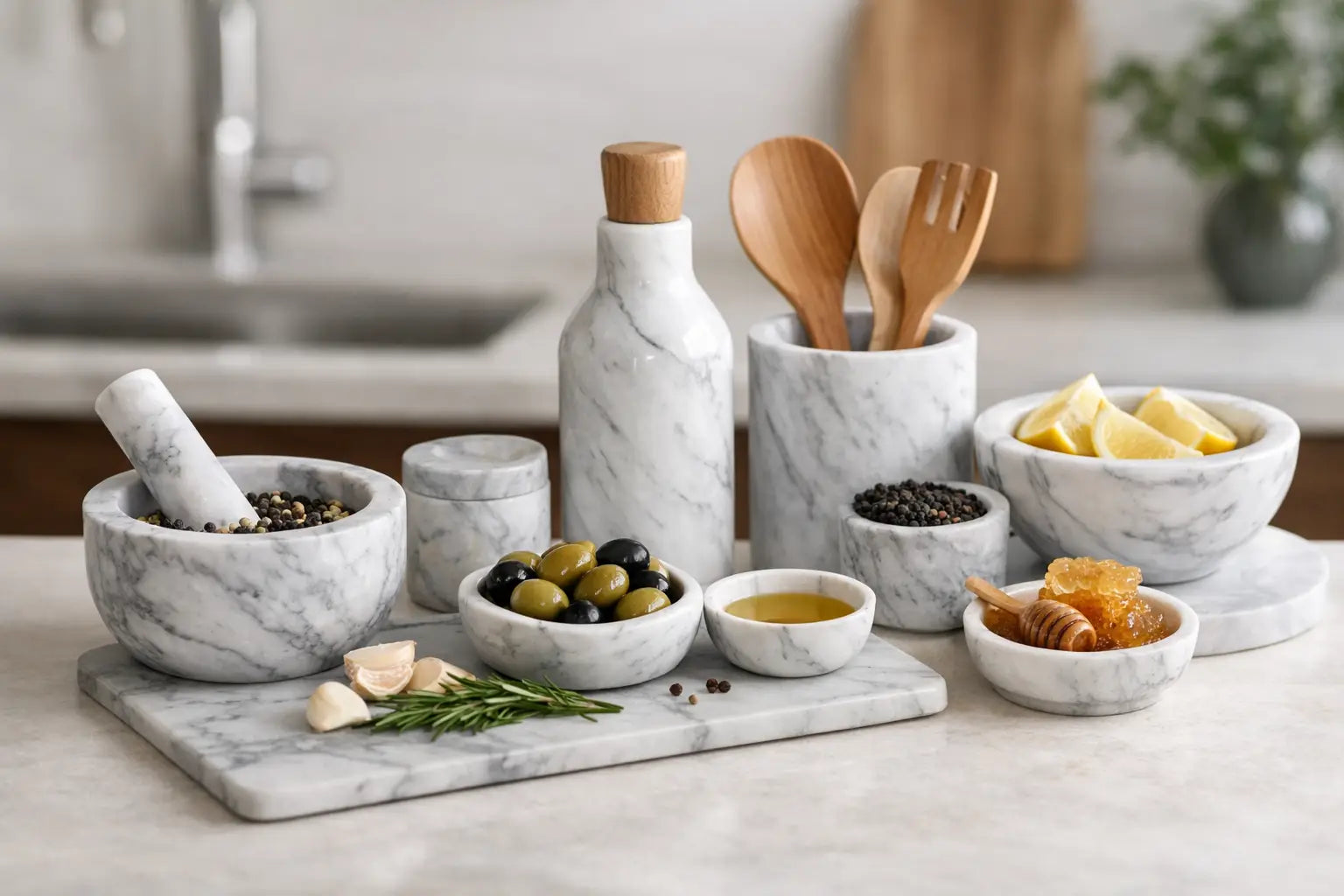
A marble spoon rest beside the hob, a cool stone board ready for figs and cheese, a weighty mortar that feels beautiful in the hand - Turkish marble kitchen accessories change the mood of a kitchen before a single meal is served. They do not shout for attention. They settle a space, bringing a sense of permanence that lighter, disposable pieces rarely achieve.
For homes shaped with intention, this matters. The kitchen is no longer hidden away as a purely practical room. It is where morning light falls across the worktop, where guests lean while dinner is finished, where daily rituals become part of a home’s character. The right accessories should serve that life well, but they should also contribute to the atmosphere. Turkish marble, with its soft veining, mineral depth and artisan finish, does exactly that.
Why Turkish marble kitchen accessories feel different
Not all marble accessories are equal, and not all stone carries the same emotional weight. Pieces made in Turkey often reflect a particular design sensibility - one shaped by ancient stone-working traditions, regional materials and a culture that understands the table as a place of beauty as well as hospitality.
There is a tactile honesty to them. A hand-carved marble bowl or trivet retains tiny variations that remind you it was made, not merely manufactured. The edges may be softly rounded rather than clinically sharp. The polish may reveal subtle movement in the stone rather than a flat, uniform surface. For discerning interiors, these distinctions are not minor. They are the difference between an object that fills space and one that gives it soul.
Turkey’s long relationship with natural stone also adds depth to these pieces. Marble has been quarried, shaped and admired across Anatolia for centuries, and that heritage still influences contemporary artisan work. In a well-curated kitchen, such objects feel rooted in history while remaining visually fresh.
The appeal of marble in a refined kitchen
Marble has always carried a quiet authority. It reflects light softly, pairs beautifully with timber, brass, linen and ceramics, and introduces a cooling visual balance to warmer palettes. In Mediterranean and coastal-inspired interiors especially, marble can make a kitchen feel composed rather than over-styled.
Its appeal is not only aesthetic. Marble has a pleasing weight, and that weight changes how an accessory behaves in use. A pestle feels grounded. A board sits firmly on the table. A utensil holder does not topple at the slightest touch. These are small luxuries, but they shape daily experience.
That said, marble asks for a little respect. It is porous by nature, and highly acidic foods can mark some finishes over time. For many buyers, that is not a flaw but part of the material’s honesty. A marble accessory is not meant to behave like plastic. It ages, and if cared for well, it does so beautifully.
Which pieces earn their place
The most compelling marble accessories tend to be the ones you reach for often. Serving boards are perhaps the easiest introduction. They move effortlessly from prep surface to table, and they bring polish to everything from sliced lemons to pastries. Spoon rests and salt cellars are smaller, but no less transformative. They make everyday cooking feel considered.
Mortars and pestles have a more sculptural presence. Left on an open shelf or worktop, they read as both practical tools and decorative objects. Marble bowls, canisters and pedestal trays can also work beautifully, though the choice depends on how minimal or layered you like your kitchen to feel.
If your space already includes bold stone worktops, heavily veined marble accessories may compete. In that case, quieter pieces with softer patterning often feel more elegant. If your kitchen is simpler - painted cabinetry, oak shelves, unlacquered brass - a more expressive stone accessory can become a focal point.
Styling Turkish marble kitchen accessories with intention
Luxury interiors rarely come from expensive materials alone. They come from restraint, balance and an understanding of contrast. Marble is most beautiful when it has room to breathe.
A single marble board propped against a tiled splashback can be enough. A spoon rest beside a copper pan, or a small bowl filled with sea salt next to olive oil, creates a vignette that feels natural rather than staged. In open-plan kitchens, these details matter because the room is always partly on display.
Colour is worth considering. White and pale grey marble suit airy kitchens with a coastal Mediterranean mood, while warmer beige or cream-toned stone sits beautifully with terracotta, walnut and aged brass. Darker marble can look striking, though it often feels more formal. The right choice depends on whether you want softness or drama.
Texture matters too. Marble can appear cold if everything around it is equally hard and polished. It comes alive next to handwoven linen, glazed ceramics, timber boards and brushed metals. This is where a curated home begins to feel layered and lived in.
For entertaining as much as cooking
One of the pleasures of marble accessories is their ease of movement between kitchen and table. A board used for chopping herbs in the afternoon can hold petits fours in the evening. A marble bowl can cradle lemons on the island one day and chilled butter at lunch the next.
For those who entertain often, this flexibility is especially appealing. It allows the kitchen to feel composed without relying on objects that are purely decorative. The accessory remains useful, yet it also contributes to the theatre of hosting - the sense that every detail has been chosen with care.
Boutique hospitality buyers understand this instinctively. Guests notice weight, texture and finish, even if they never name them. A breakfast setting with marble accents feels more elevated because the material signals permanence and discernment.
What to look for before you buy
The first question is provenance. In a market crowded with generic stoneware, authenticity matters. A piece sourced from Turkish workshops carries a different value from anonymous factory-made stock. It has a clearer design language, and often a more nuanced finish.
Then consider scale. Marble can be visually powerful, so proportions must suit the room. A generously sized serving board can look glorious in a large kitchen, but overwhelming in a compact London flat. Small accessories often have the greatest impact because they layer in luxury without cluttering the space.
Finish is another detail worth your attention. Highly polished marble feels more formal and reflective. Honed or satin finishes can feel softer, more architectural and easier to live with. Neither is universally better. It depends on your cabinetry, lighting and the atmosphere you want to create.
Finally, notice the veining. Strong movement in the stone creates drama, but it can also limit versatility. Gentler veining is often easier to style over time. If you tend to refresh linens, candles or tableware seasonally, a quieter marble piece may adapt more gracefully.
Caring for marble without fuss
Marble does not require elaborate maintenance, but it rewards sensible habits. Wipe spills promptly, especially wine, citrus and vinegar. Clean with a soft cloth and mild soap rather than harsh sprays. Avoid treating a marble board as if it were a butcher’s block for heavy cutting, unless you are comfortable with surface marks becoming part of its story.
Some owners prefer a pristine finish. Others welcome the softened signs of use. Neither approach is wrong. In fact, this is one of the reasons marble remains compelling - it can live as a precious object or as an everyday companion, depending on the household.
If you are investing in artisan stone pieces, care should feel less like a chore and more like stewardship. These are the objects that stay with a home, move from one kitchen to the next, and gather memories along the way.
A material with heritage, not trend
Trends move quickly through the kitchen category. One season favours bright novelty, another leans industrial, another strips everything back. Marble resists that cycle because it belongs to a much older visual language. It has architectural legitimacy, cultural depth and an innate sense of calm.
That is why Turkish marble kitchen accessories resonate so strongly in elevated interiors. They are decorative, yes, but never merely decorative. They speak of craft, place and permanence. For those who want a kitchen to feel curated rather than convenient, that distinction is everything.
At Casa Serena Interiores, that philosophy sits at the heart of the collection process: choosing pieces that honour the artisan’s hand while bringing grace to daily life. The best kitchen accessories do not simply complete a room. They refine how you live within it.
Choose marble when you want the ordinary to feel more beautiful - and when you want beauty to last long after the table has been cleared.


