


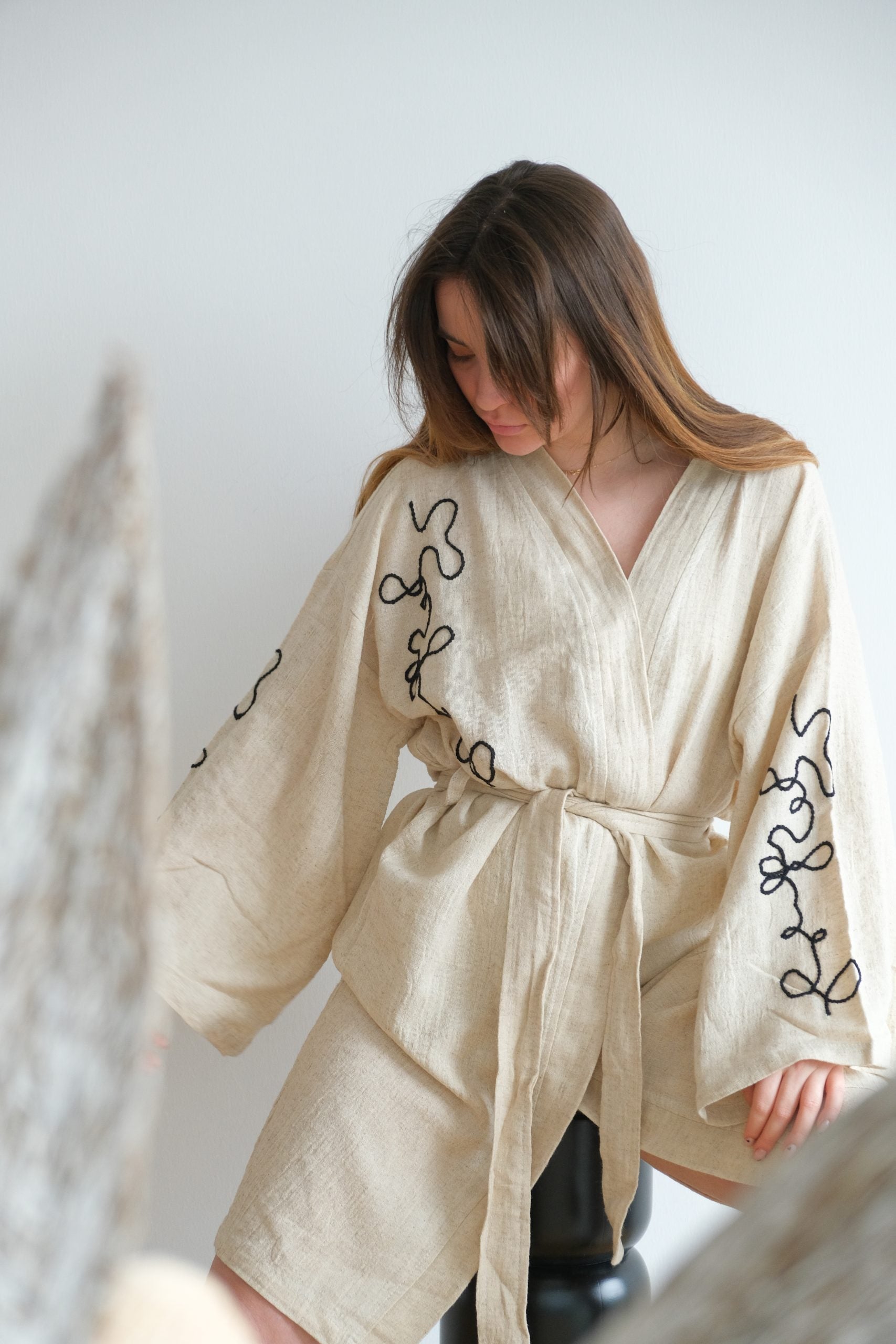
The robe you reach for after a bath says more about your home than most people realise. It lives at the intersection of comfort and ceremony - a private luxury, seen by few yet felt every day. The finest Turkish robes for women carry that quiet power beautifully, turning a practical household textile into something sensual, cultivated and deeply personal.
At their best, these robes are not simply soft coverings to wear between shower and wardrobe. They are part of a wider textile heritage shaped by hammam culture, coastal living and generations of weaving knowledge. For women who care about the atmosphere of the home as much as its appearance, a Turkish robe belongs in the same conversation as linen bedding, hand-thrown ceramics and a well-chosen candle. It is a daily object, yes, but also a marker of taste.
Why Turkish robes for women feel different
What separates Turkish robes from ordinary bathrobes is rarely just one detail. It is the balance of absorbency, drape, weight and finish. Turkish cotton is prized because its long fibres create cloth that feels smooth against the skin while still becoming more supple over time. A robe made well will absorb moisture without becoming heavy, and it will move with grace rather than bulk.
That distinction matters. Many robes promise softness, but softness alone can feel flimsy or overly plush in a way that traps heat. Turkish robes often offer a more refined experience. They tend to sit closer to the body, with a cleaner silhouette and a lighter hand feel that works especially well in warmer interiors, holiday homes or layered Mediterranean-style bathrooms.
There is also a cultural dimension that gives them depth. The Turkish bath tradition has long valued textiles that are practical, beautiful and made to endure. In that sense, a robe is not an afterthought. It is part of a ritual - bathing, resting, lingering, beginning again. That heritage lends Turkish robes an emotional richness mass-market versions rarely possess.
Materials and weaves worth understanding
Not all Turkish robes are made in the same way, and that is where discernment becomes useful. Some are woven from peshtemal-style cotton, giving them a flatter, lighter profile. These are ideal for women who dislike thick towelling and want something breathable, elegant and easy to pack for travel or a weekend away. They dry quickly, fold neatly and feel effortless rather than cumbersome.
Others are made with terry cotton on the interior or throughout, which creates a more traditional absorbent robe while still preserving the character of Turkish cotton. This style suits cooler months, slower mornings and anyone who wants a cocooning post-bath feel without the dense heaviness often found in generic hotel robes.
Then there are robes that blend texture and visual interest - subtle stripes, hand-finished tassels, soft neutrals and tones drawn from stone, sand, sea and sun-faded plaster. For a design-led buyer, these details matter. A robe hanging on a brass hook or draped over a bath stool becomes part of the room’s composition. It should belong there.
How to choose Turkish robes for women well
The right choice depends less on trend and more on how you live. If your home leans coastal, airy and restrained, a lightweight robe in chalk, oat or muted blue will feel natural. If your bathing ritual is more about warmth and retreat, a thicker weave with generous sleeves and a substantial belt may be the better fit.
Length is another consideration often overlooked. A shorter robe can feel fresh and practical, especially in spring and summer, while a mid-calf or full-length robe creates a more enveloping mood. Neither is superior. It depends on whether you want ease, drama or something in between.
Fit also changes the experience. Some women prefer a robe that wraps closely, almost like a tailored layer. Others want looseness and fluidity. When a robe is artisan-made, slight variations can add to its character, but the cut should still feel intentional. The shoulder line, sleeve width and tie placement all influence whether a robe feels elegant or merely serviceable.
Finally, consider how the robe will live within your home. If it will hang in plain sight, choose it as you would any visible textile. Ask whether the colour speaks to your bathroom palette, whether the texture complements stone or timber, whether the finish feels elevated enough for your space. Beautiful homes are built on this kind of consistency.
The role of craftsmanship in everyday luxury
Luxury in the home is often mistaken for excess. In truth, it is more often about edit, touch and provenance. A well-made Turkish robe brings all three. You feel the quality immediately, not because it shouts, but because nothing about it feels accidental.
Artisan production is part of that story. When robes are sourced from Turkish makers rather than anonymous large-scale factories, there is usually greater care in the choice of cotton, the finishing of seams and the integrity of the weave. That care shows itself over time. The robe softens beautifully, keeps its shape more gracefully and remains a pleasure to use long after novelty would have faded in a lesser piece.
This is where value becomes more nuanced than price. A cheap robe may answer an immediate need, but it rarely becomes beloved. A truly beautiful robe enters the rhythm of domestic life. It is what you reach for on early Sundays, after sea swims, during houseguests' visits, or on those winter evenings when a hot bath and quiet room feel like restoration.
Styling Turkish robes within a refined home
There is a reason design-conscious women increasingly think beyond furniture when shaping a home. Atmosphere is created by the intimate objects too - the textiles closest to the body, the pieces that soften routine. A Turkish robe can deepen that atmosphere with very little effort.
In a calm bathroom, it pairs naturally with honed marble, handmade soap dishes and brushed metal fittings. In a guest room, it can elevate hospitality in an instant, especially when folded beside towels or placed at the foot of the bed. In a second home by the coast, a lightweight robe becomes almost essential - easy after the shower, elegant by the pool, useful without ever appearing casual in the wrong way.
The key is not to over-style it. Let the robe feel lived with, not staged. A beautiful textile earns its place through use. That is part of its charm.
What to look for before you buy
Images can suggest softness, but they cannot tell you everything. Read the details carefully. Look for mention of Turkish cotton, artisan weaving, absorbency, weight and finishing. Pay attention to whether the robe is intended for bathing, lounging or travel, because each purpose calls for a slightly different construction.
It is also wise to think about maintenance. Cotton robes are generally straightforward to care for, but lighter weaves may behave differently from heavy terry. Some buyers prefer a robe that tumbles into softness with each wash, while others want a crisper appearance that holds structure. Neither preference is wrong, but being clear about it avoids disappointment.
If provenance matters to you, ask where and how the robe is made. In a market crowded with products borrowing the language of heritage, real sourcing stands apart. That is one reason curated collections feel so valuable. Retailers such as Casa Serena Living place emphasis on authenticity, selecting pieces that carry the hand and history of Turkish making rather than reproductions with no meaningful origin.
More than a robe
The enduring appeal of Turkish robes lies in their dual nature. They are useful, certainly, but they also express a way of living - slower, more tactile, more attentive to beauty in the hours no one else sees. For women who understand that luxury begins in the private rituals of the home, that distinction is everything.
Choose one for the way it feels on the skin, but also for the mood it creates when morning light hits the tiles and the room is still. The right robe does not merely complete a bathroom. It changes how you inhabit it.


