


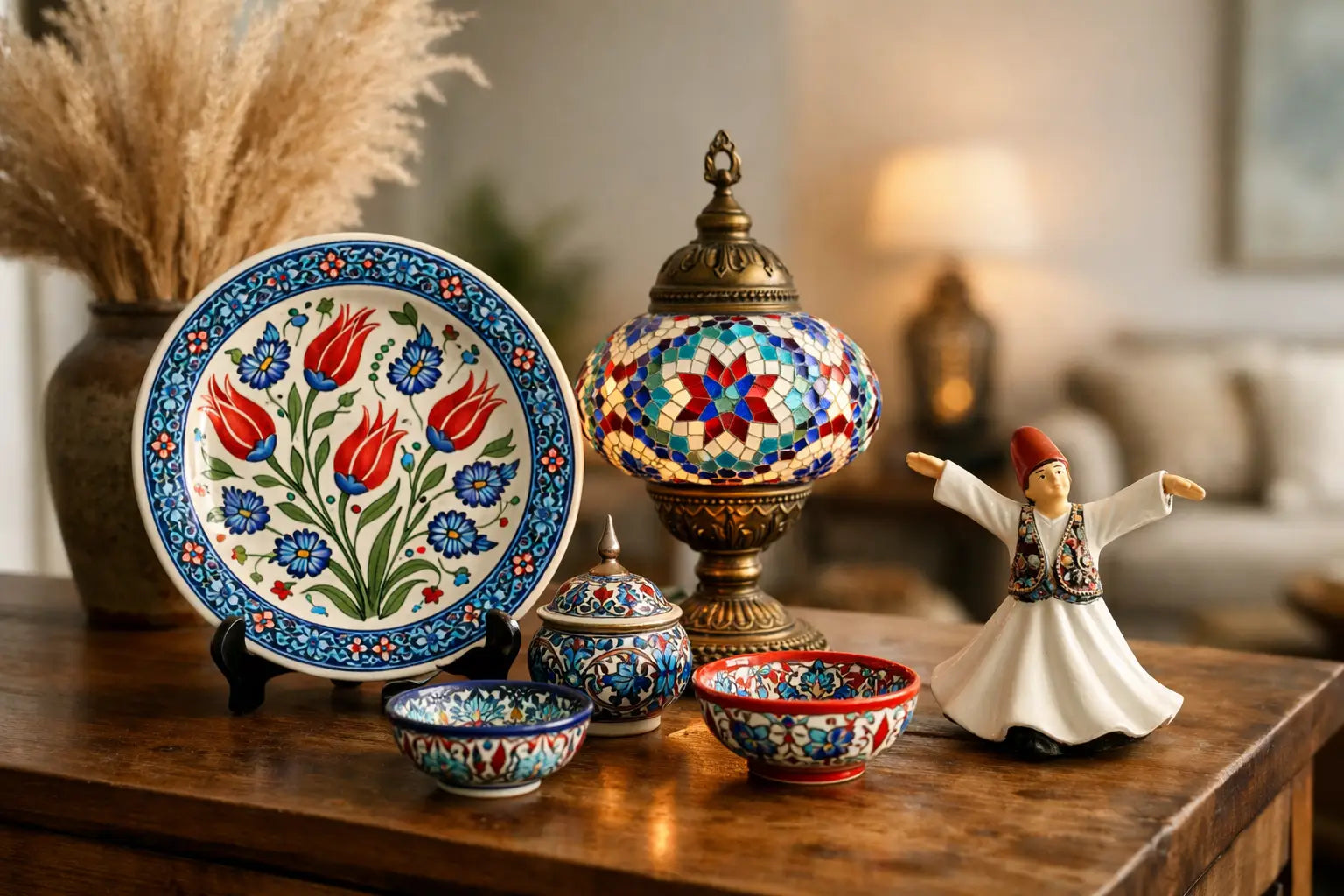
There is a particular kind of quiet confidence that enters a room when ceramic has been chosen well. Not the flat perfection of factory-made pieces, but the luminous presence of hand-finished surfaces, brush-drawn motifs and glazes that hold light with depth. That is the enduring appeal of Turkish decorative ceramic - objects that bring pattern, provenance and a sense of cultivated ease into the home.
For discerning interiors, Turkish decorative ceramic is never simply an accessory. It can soften a pared-back Mediterranean scheme, bring rhythm to a neutral kitchen, or introduce a layer of heritage into a contemporary sitting room. The best pieces do more than fill a shelf. They create atmosphere, suggest travel, and speak quietly of workmanship that has resisted haste.
Why Turkish decorative ceramic feels so distinctive
Turkish ceramic traditions carry an extraordinary visual language. From the celebrated legacy of Iznik to regional workshop practices across Anatolia, these pieces are shaped by centuries of artistic exchange, technical refinement and cultural memory. Floral arabesques, tulips, saz leaves, carnations and geometric borders are not arbitrary decoration. They belong to a design vocabulary that has long connected courtly elegance with daily life.
What makes this tradition especially compelling for modern homes is its balance. Turkish ceramics can be intricate without feeling heavy, colourful without becoming unruly, and decorative without tipping into excess. A plate painted in cobalt, emerald and terracotta can sit beautifully against limewashed walls, natural oak, veined marble or crisp white linen. It carries ornament, yet still feels composed.
That balance matters when you are furnishing with intention. Many homes today seek warmth after years of overly stark minimalism. Yet warmth without discipline can quickly become clutter. Decorative Turkish ceramic offers a middle path - rich in character, but anchored by centuries of visual coherence.
The craft behind Turkish decorative ceramic
Part of the value lies in how these pieces are made. Authentic workshop ceramics reveal the human hand at every stage, from the shaping of the form to the application of the glaze and the brushwork of each motif. Even when artisans work within a traditional pattern family, no two pieces are truly identical. There may be a slight variation in line, a subtle shift in tone, a rhythm to the painting that belongs to one maker rather than an anonymous machine.
For collectors and design-led buyers, this is not an imperfection to overlook. It is precisely the point. Handmade ceramic has presence because it bears the mark of time, labour and skill. The object feels inhabited before it ever enters your home.
This is also where provenance becomes essential. Not all products marketed as Turkish style are genuinely tied to Turkish craftsmanship. There is a difference between a piece inspired by Ottoman or Iznik aesthetics and one made within the living continuum of those traditions. Buyers who value authenticity tend to notice this immediately. The glaze has more depth. The painting has more tension and grace. The piece does not feel copied from a motif book; it feels connected to a lineage.
How to use Turkish decorative ceramic in refined interiors
The most elegant interiors rarely rely on quantity. They rely on placement, contrast and restraint. Turkish ceramic works especially well when it is allowed space to breathe.
In a kitchen, a small grouping of hand-painted bowls or plates can lift open shelving from functional to quietly memorable. Against stone, timber or plaster, the shine of glazed ceramic introduces movement and freshness. In a dining setting, a ceramic serving piece or decorative platter can act as the visual anchor of the table, especially when paired with linen, glass and natural metals.
In the sitting room, decorative plates displayed on a wall can be striking, though the effect depends on editing. A tight arrangement with a considered palette feels collected. A random assortment can feel busy. The same is true of ceramic vases, lidded jars and accent objects. One or two well-scaled pieces often carry more authority than a crowded shelf of smaller items.
Bedrooms and bathrooms should not be overlooked. A hand-painted dish on a bedside table, a ceramic bowl for jewellery, or a decorative vessel near the basin can bring intimacy to spaces that benefit from softness. These are not grand gestures, but they shift the emotional tone of a room.
Choosing pieces that feel timeless rather than themed
This is where judgement matters. Turkish decorative ceramic is rich in pattern and colour, which means it can either elevate a room or make it feel overly staged. The difference often comes down to what you pair it with.
If your interior already includes patterned textiles, antique woods or expressive stone, choose ceramic with a more disciplined palette. Cobalt and white, or a restrained floral motif, will add refinement without competing for attention. If the room is quieter - perhaps built around chalky neutrals, woven textures and soft architectural lines - a more detailed piece with emerald, coral or saffron can provide a beautiful focal note.
Scale deserves equal care. Large platters, chargers and statement vases suit generous spaces, kitchen islands and substantial sideboards. Smaller dishes and bowls are more effective in intimate corners or layered into existing arrangements. A piece should feel proportionate to both the room and the furniture it inhabits.
It also helps to ask whether you want the ceramic to read as heritage, accent, or conversation piece. Heritage pieces blend into the architecture of the home and feel as though they belong there permanently. Accent pieces provide colour and contrast. Conversation pieces carry more drama and often deserve solitary placement. None is better than the other, but clarity leads to a more assured result.
Turkish decorative ceramic and the Mediterranean home
There is a natural affinity between Turkish ceramic and Mediterranean interiors, which is one reason it resonates so strongly with sophisticated European buyers. Both traditions value tactility, sunlight, hospitality and the beauty of everyday ritual. Both understand that a home should feel layered rather than sterile.
Placed within a Mediterranean design scheme, Turkish ceramic can bridge refinement and ease. The blue tones echo sea and sky. The terracotta and green notes sit beautifully with olive wood, rattan, stone floors and sun-washed walls. Even more formal motifs can feel relaxed when set against organic materials and coastal light.
This compatibility does not mean every room should lean overtly regional. In fact, some of the most compelling spaces use Turkish ceramic sparingly within otherwise contemporary or understated interiors. A single painted bowl on a travertine console can be enough. A pair of ceramic plates above a mantel can shift the whole room. The aim is not to create a themed environment, but to allow heritage objects to bring intelligence and soul to modern living.
What to look for when buying authentic pieces
Discerning buyers tend to ask better questions, and ceramic rewards that instinct. Look first at the surface. Hand-finished glaze should have clarity and life rather than a dull, flat shine. Then look at the brushwork. Good painted decoration has confidence. Lines are fluid, petals have shape, and the composition feels balanced even when richly detailed.
Material and finish also matter. Some pieces are intended purely for display, while others can move between decorative and practical use. Knowing the difference helps you buy well and style with confidence. A wall plate, a fruit bowl and a lidded jar all serve different purposes, and each contributes differently to a room.
Finally, consider the source. Curated collections with direct artisan relationships tend to offer stronger integrity than generic catalogue stock. That is especially true in the premium market, where buyers are not only paying for a beautiful object, but for scarcity, workmanship and cultural honesty. At Casa Serena Interiores, this distinction sits at the heart of the selection - pieces chosen not for trend value, but for their ability to endure aesthetically and emotionally.
Living with pieces that age beautifully
One of the pleasures of decorative ceramic is that it does not ask to be hidden away. These are objects to live with. They can hold lemons in the kitchen, collect shells from a summer walk, sit quietly on a console through every season, or become part of a table laid for friends. Their beauty deepens when they are folded into real life.
That, perhaps, is their greatest luxury. Turkish decorative ceramic offers more than ornament. It brings continuity into the home - between past and present, utility and beauty, craftsmanship and daily ritual. If you choose with discernment, each piece becomes more than a purchase. It becomes part of the visual memory of the rooms you love most.
The best homes are not built in a single moment of styling. They are shaped slowly, through objects with feeling, history and lasting grace.


