


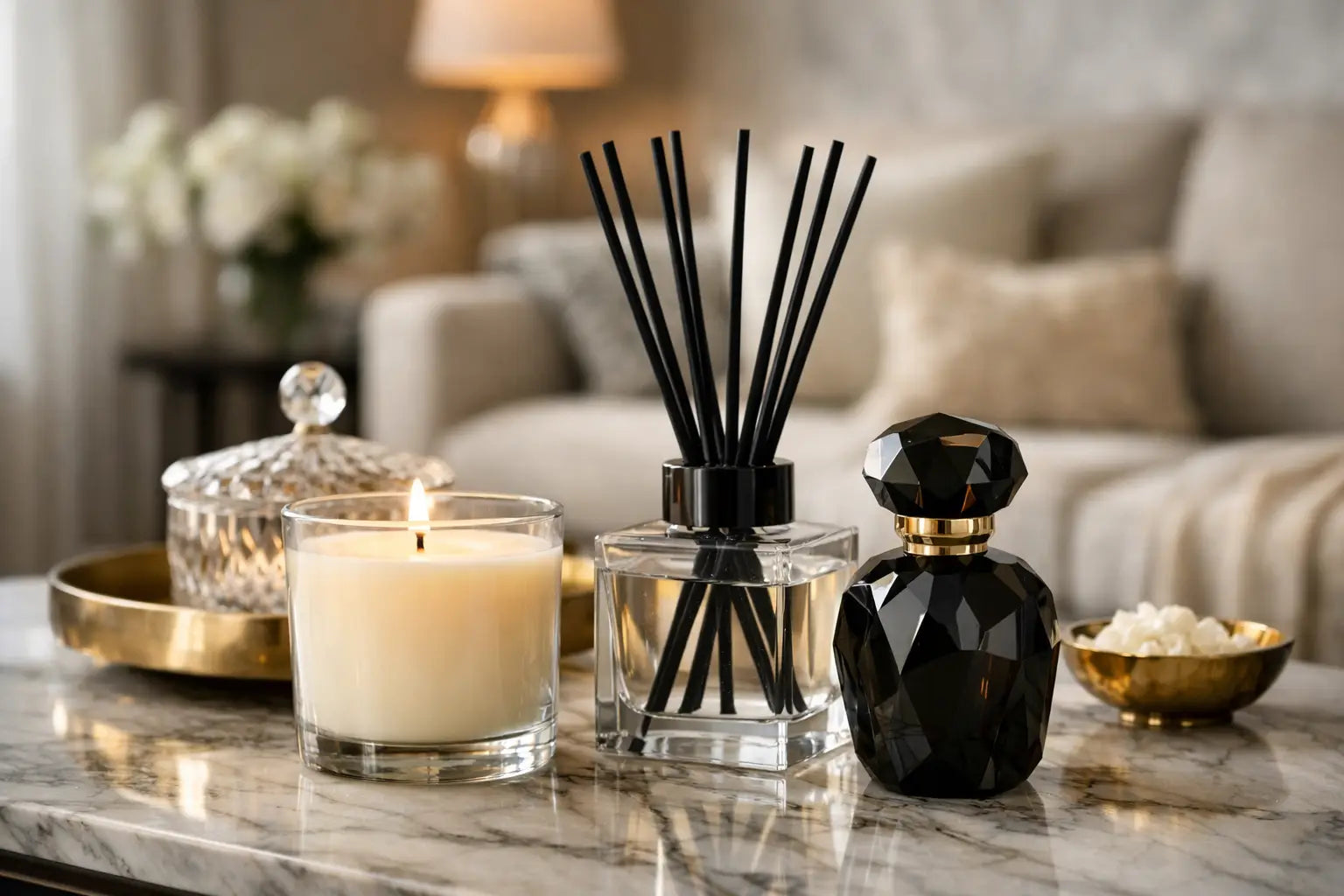
A room is rarely remembered for its furniture alone. What lingers, often more powerfully than colour or form, is the atmosphere - the quiet impression of neroli in a sunlit hall, fig leaf drifting through a sitting room, or the soft resin of amber in a bedroom at dusk. Luxury home fragrances do not simply perfume a space. They give it character, rhythm and a sense of completion.
For those who curate their homes with intention, scent is not an afterthought. It is part of the architecture of feeling. Just as a handwoven rug grounds a room and an artisan ceramic bowl catches the eye, fragrance shapes the emotional register of a home. It can make a space feel expansive or intimate, crisp or enveloping, ceremonial or deeply personal.
Why luxury home fragrances matter in a well-curated interior
The difference between an ordinary room and one that feels truly considered often lives in the details people cannot immediately name. Fragrance belongs to that category. It works quietly, but its effect is immediate.
A luxury scent has depth. It unfolds rather than announces itself. You notice the brightness first, perhaps citrus peel or green herbs, then something softer appears - iris, rose, olive leaf, white woods, tobacco, moss. This complexity is what gives fine home fragrance its elegance. It avoids the flat sweetness or harshness that can make a room feel synthetic, however beautifully styled it may be.
There is also the matter of materials. In well-made candles and diffusers, the vessel, wax, oils and reeds all contribute to the experience. The object itself should belong in the room even before it is lit or opened. In a refined interior, a fragrance piece is decorative in its own right, not something to be hidden away.
For homes shaped by Mediterranean ease, old-world craft and natural materials, scent should follow the same principle. It must feel collected rather than generic, evocative rather than overpowering.
Choosing luxury home fragrances with discernment
The most beautiful fragrance is not always the strongest or the most fashionable. It is the one that speaks naturally to the mood of your home.
Start with the architecture and light. A coastal house with linen curtains, pale stone and sea-facing windows can carry saline, citrus or aromatic notes beautifully. Think bergamot, orange blossom, basil, eucalyptus or wild fig. These scents feel luminous and airy, and they complement interiors where texture and natural light do much of the work.
A darker, more cocooning home asks for something else. In rooms with walnut, antique brass, velvet or marble, richer fragrances often feel more at home. Amber, oud, cedar, patchouli, saffron and incense can add warmth and gravity. The key is proportion. A dense scent in a small room may feel oppressive, while the same fragrance in a generous drawing room can feel sumptuous.
Then consider seasonality, but do so with a light hand. It is tempting to assign florals to spring and woods to winter, yet the best homes are not styled by formula. A soft rose in January can feel restorative. Green tomato leaf in high summer can be more sophisticated than anything overtly tropical. It depends on how you wish the room to feel, not only on the calendar.
Scenting each room with intention
A home should not smell the same everywhere. Uniformity flattens experience. Different rooms serve different emotional purposes, and fragrance can support that.
Hallways and entrance spaces
The entrance sets the tone. Here, freshness matters, but so does polish. Citrus, petitgrain, neroli and light herbs create a sense of welcome without feeling too intimate. This is where many people make the mistake of choosing something too sweet. A hall should feel composed and clean, not confectioned.
Sitting rooms and entertaining spaces
Living areas benefit from layered, sociable fragrances. Fig, black tea, cedarwood, leather, green woods and soft spice work especially well because they have presence without becoming intrusive during conversation. If you entertain often, avoid anything too powdery or heavily floral, which can clash with food, wine and candlelight.
Bedrooms and private rooms
This is where scent can become more sensual and restorative. Lavender, iris, white musk, sandalwood, amber and rose all have a place here. The right bedroom fragrance should soften the edges of the day. It should never feel loud. Luxury, in this context, is restraint.
Bathrooms
Bathrooms suit scents with clarity - eucalyptus, rosemary, mint, orange blossom, sea salt or clean florals. Yet clarity need not mean sterility. The best bathroom fragrances feel spa-like without becoming clinical. A diffuser can be ideal here, especially where a constant subtle presence is more useful than the ritual of lighting a candle.
Candles, diffusers and room sprays
Each format creates a different experience, and choosing well is part of living elegantly.
Candles bring ceremony. They ask you to pause, strike a match and let the room change slowly. Their glow matters as much as their scent, which is why they remain indispensable in dining rooms, bedrooms and evening sitting spaces. A beautifully poured candle in a considered vessel feels both decorative and deeply atmospheric.
Diffusers are quieter and more constant. They suit hallways, dressing rooms, bathrooms and guest suites where fragrance should be present without effort. They are particularly useful in homes where one wants continuity - a gentle scent that lingers through the day rather than arriving in a single dramatic moment.
Room sprays offer immediacy. They are useful before guests arrive or when a room needs reviving between seasons. Yet they work best as an accent, not a substitute for quality. If the fragrance itself lacks sophistication, a spray only amplifies the problem.
The notes that feel timeless
Some fragrance families return again and again in refined interiors because they carry a sense of permanence. Citrus is one, especially bitter orange, bergamot and neroli, because it feels bright yet grown-up. Woods are another, particularly cedar and sandalwood, which lend shape and warmth. Herbs such as rosemary, basil and sage bring an old Mediterranean clarity that feels intelligent rather than trendy.
Florals require greater care. Tuberose and jasmine can be magnificent, but they can also dominate. Rose is often misunderstood. In the right composition, especially when softened with woods, spice or musk, it feels cultivated and modern rather than nostalgic. Fig remains a favourite because it bridges green freshness and creamy depth, making it remarkably versatile.
What dates most quickly are scents designed to impress in the first five seconds. Very sugary blends, overly marine accords and aggressively synthetic fruits often feel thin in a home where every other object has been chosen for substance and beauty.
Fragrance as part of a layered home
The most memorable interiors are never built from one statement alone. They are layered through material, light, silhouette and story. Fragrance should follow the same logic.
A hand-thrown ceramic vessel, a marble tray, washed linen, olive wood, copper, candlelight - these details all create a sensory language. Scent joins that language. It can echo the mineral coolness of stone, the softness of fabric, the warmth of polished wood. When chosen with care, it does not sit apart from the room. It belongs to it.
This is why provenance matters even in fragrance. A piece made with attention, using quality oils and thoughtful presentation, carries a different energy from a mass-produced object designed only to mimic luxury. The distinction is subtle at first, then unmistakable. One fills space. The other elevates it.
For those drawn to artisan living, the appeal is not extravagance for its own sake. It is the pleasure of living among objects that feel honest, beautiful and enduring. Casa Serena Interiores speaks to this instinct so well because it understands that a home is shaped by emotion as much as ornament.
When less fragrance is more
One of the surest markers of taste is knowing when to stop. Not every corner requires scent, and not every room benefits from intensity. In open-plan spaces, for instance, a single beautiful candle may be enough. Layering several competing fragrances can quickly become chaotic, especially around cooking and dining areas.
It is also worth allowing certain materials to speak for themselves. Fresh wood, old books, linen warmed by the sun, beeswax, stone after rain - these are part of a home’s natural perfume. Luxury home fragrances should enhance this atmosphere, not erase it.
A house with soul does not smell staged. It smells lived in, cared for and quietly exquisite.
The finest fragrance choice is often the one guests cannot quite identify, only remember. It leaves behind a feeling of grace, intimacy and assurance - the sense that every element in the room has been chosen by someone who understands that beauty is never only seen.


