


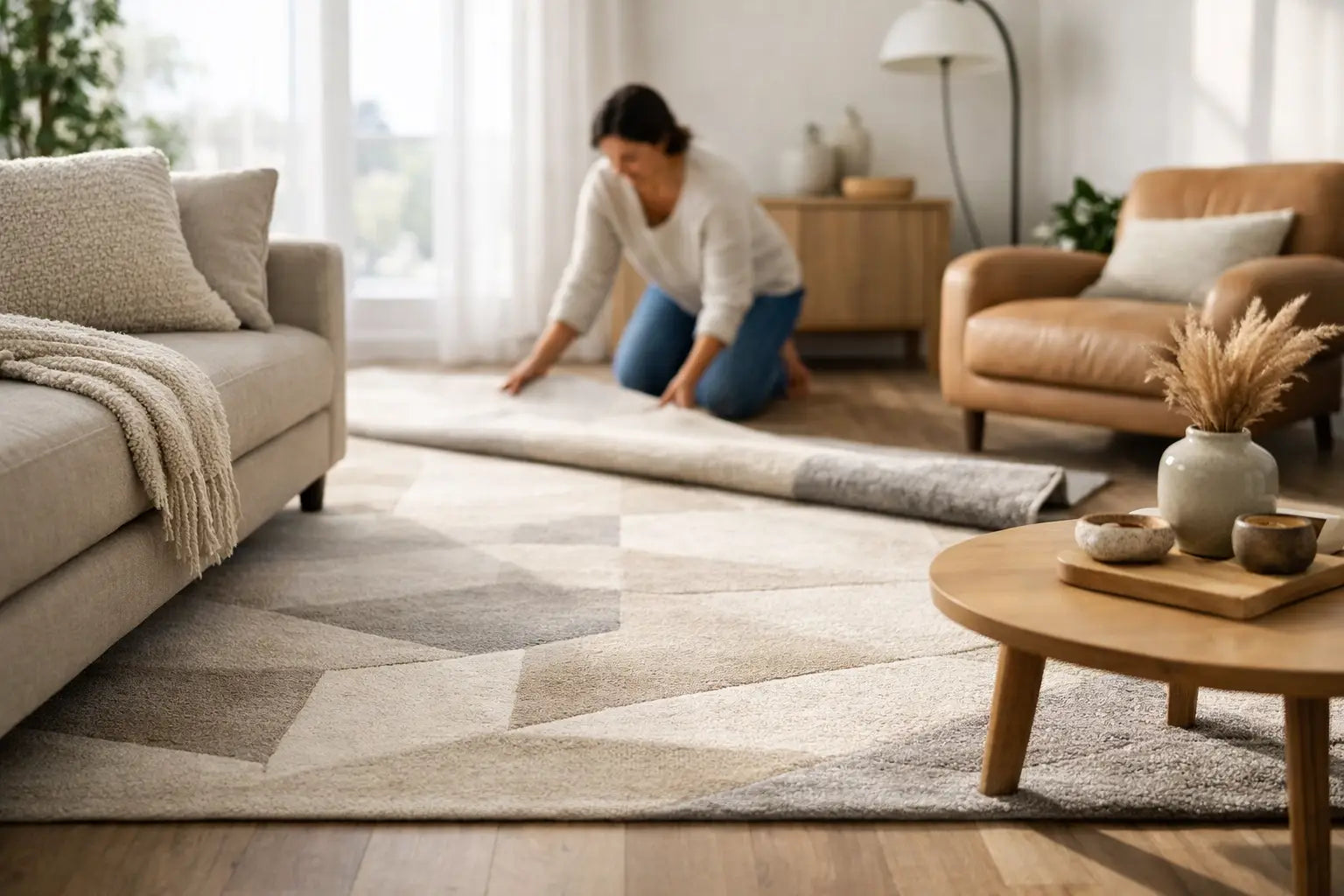
There is a moment when a sitting room looks almost complete and yet still feels unsettled. The sofa is in place, the lighting is flattering, the palette is coherent - but the room lacks gravity. That is usually the moment the question appears: what rug goes in the living room. Not as a minor decorative choice, but as the decision that can soften architecture, frame conversation, and give a space its emotional centre.
In a well-composed interior, the rug does more than fill a gap on the floor. It establishes proportion, quiets acoustics, warms underfoot, and tells the eye where the room begins and where it rests. The right one can make a modest scheme feel curated. The wrong one, however beautiful on its own, can leave the room feeling fragmented or overly formal. Choosing well is less about rules for their own sake and more about understanding balance.
What rug goes in the living room depending on the size
The first decision is not colour or pattern. It is scale. Size is what separates an interior that feels considered from one that feels hesitant.
In most sitting rooms, a rug that is too small is the most common mistake. It makes furniture appear to float apart, as though each piece belongs to a different conversation. A generous rug, by contrast, gathers the room together. Ideally, the front legs of the sofa and armchairs should sit on the rug at minimum. In a larger room, placing all main furniture legs on the rug creates an especially composed effect.
If your sitting room is compact, that does not mean choosing a tiny rug. It means choosing one that respects the room's footprint while still anchoring the furniture. Leave a visible border of flooring around the edges so the room can breathe, but avoid a rug that sits adrift in the centre like an afterthought.
In open-plan spaces, scale becomes even more important. The rug should define the seating zone clearly, particularly when the sitting room flows into a dining area or kitchen. Here, the rug acts almost like architecture, drawing an invisible boundary without interrupting the openness of the plan.
How to choose the right style for the room
Once the size is resolved, style becomes easier to judge. The question is not simply what looks attractive, but what kind of atmosphere you want the room to hold.
For a refined, layered interior, handcrafted Turkish rugs are especially persuasive because they bring both structure and soul. A vintage-style Oushak or Anatolian design softens contemporary furniture beautifully. The faded pigments, nuanced motifs and subtle irregularities prevent a room from feeling over-styled. They introduce history without heaviness.
If your sitting room leans coastal or Mediterranean, a rug with softened terracotta, washed blue, olive, sand or stone tones can echo the landscape in a way that feels natural rather than themed. In these interiors, the most successful rugs rarely shout. They murmur. They create depth through patina, texture and age-worn character.
For more pared-back schemes, a low-contrast rug can be just as effective as a patterned one. Think of a finely woven piece in ivory, oat, soft taupe or muted charcoal. Texture then becomes the point of interest - wool pile, hand-knotting, slight abrash in the dye, or a delicately distressed finish. The room stays calm, but never flat.
If, however, the furniture is very restrained, a more expressive rug can be the element that gives the room identity. Rich reds, tobacco, deep indigo and antique gold can all work beautifully, provided the rest of the palette leaves space for them. In a luxurious interior, contrast often creates the memorability.
Material matters more than most people expect
A sitting room rug must be beautiful, certainly, but it also has to live well. Material changes not only the look of the piece, but its longevity, touch and practicality.
Wool remains one of the most desirable choices for a sitting room because it combines resilience with softness. It wears gracefully, holds dye beautifully, and has a depth that synthetic fibres struggle to imitate. Underfoot, it feels generous. Visually, it carries a quiet richness that suits both classic and contemporary spaces.
Cotton can work in informal rooms or lighter seasonal schemes, though it generally offers less structure and durability than wool. Silk or silk-blend rugs are undeniably exquisite, but in a heavily used sitting room they require more care. They are often better suited to lower-traffic spaces where their lustre can be appreciated without constant wear.
This is where trade-offs matter. If the room is used daily by children, pets, guests and family, practicality deserves a seat at the table. That does not mean compromising on elegance. It means choosing a rug whose beauty survives ordinary life. A handwoven wool rug with character will often age more gracefully than something pristine and delicate.
What rug goes in the living room if you have pets, children or heavy use
A beautiful home should still feel inhabited. If your sitting room is lively, choose a rug with pattern and tonal variation rather than a very flat plain weave in a pale shade. Motif and movement are forgiving. They disguise the small traces of daily life that inevitably appear.
Low to medium pile is often the safest choice for busier households. It is easier to care for and generally holds its shape better over time. Very shaggy textures may feel inviting at first, but they can quickly look tired in a frequently used room.
Colour matters here too. Mid-toned palettes tend to be more practical than extremes. Very dark rugs show lint and dust more than people expect, while very pale rugs demand a little more vigilance. Soft rust, sage, faded denim, clay, warm beige and aged rose are often the sweet spot - elegant, nuanced and livable.
How colour changes the feeling of the room
The rug often carries more visual weight than any other textile in the sitting room. Because of its scale, its colour can shift the whole mood of the space.
If the room lacks warmth, a rug with terracotta, cinnamon, honey or muted burgundy can immediately make it feel more intimate. If the room already has strong sun and warmth, cooler notes such as blue-grey, washed indigo or soft green can bring composure.
There is also the question of contrast. A rug close in tone to the flooring creates serenity and a sense of expansiveness. A rug that contrasts more strongly with the floor defines the seating area with greater precision. Neither is automatically better. It depends on whether you want the room to feel calm and blended or shaped and dramatic.
Pattern should be judged in relation to everything else in the room. If the sofa fabric, curtains and cushions are already expressive, a quieter rug may provide relief. If the upholstery is largely plain, the rug can carry more ornament. The most sophisticated rooms usually balance restraint with one or two stronger gestures.
Proportion, placement and the details that make it feel expensive
Placement is where many otherwise lovely rooms lose refinement. A rug should sit in relation to the architecture and furniture, not simply the empty floor space. Centre it on the seating arrangement rather than the room if the room is asymmetrical. Let it align with the sofa where possible. These small decisions create a sense of intention.
A good underlay also matters. It improves comfort, protects the rug, and helps it sit properly. That finished, grounded look people often associate with expensive interiors is rarely accidental.
Layering can work beautifully, but only when done with restraint. In larger sitting rooms, placing a smaller antique-style rug over a larger neutral base can add depth. Yet this approach suits certain interiors more than others. In a room that is already visually rich, one exceptional rug is often enough.
And then there is provenance. A rug with visible handcraft has a different presence from a mass-produced alternative. Slight variations in motif, dye and weave are not flaws. They are signs of the human hand. In a room designed to feel personal rather than generic, that distinction matters.
The rug that belongs in your sitting room
When people ask what rug goes in the living room, they are often really asking something more intimate: what kind of room am I trying to create? One that feels formal and composed, or relaxed and sun-warmed? One that frames elegant entertaining, or one that invites long afternoons and bare feet? The answer should guide every choice, from size to material to pattern.
At Casa Serena Interiores, we believe the finest rooms are not assembled in haste. They are curated patiently, with objects that carry memory, texture and meaning. A sitting room rug should do exactly that. It should anchor the eye, flatter the light, and make the room feel more like itself.
Choose the piece that gives the space coherence, yes, but also choose the one that makes the room exhale. That is usually the right one.


