


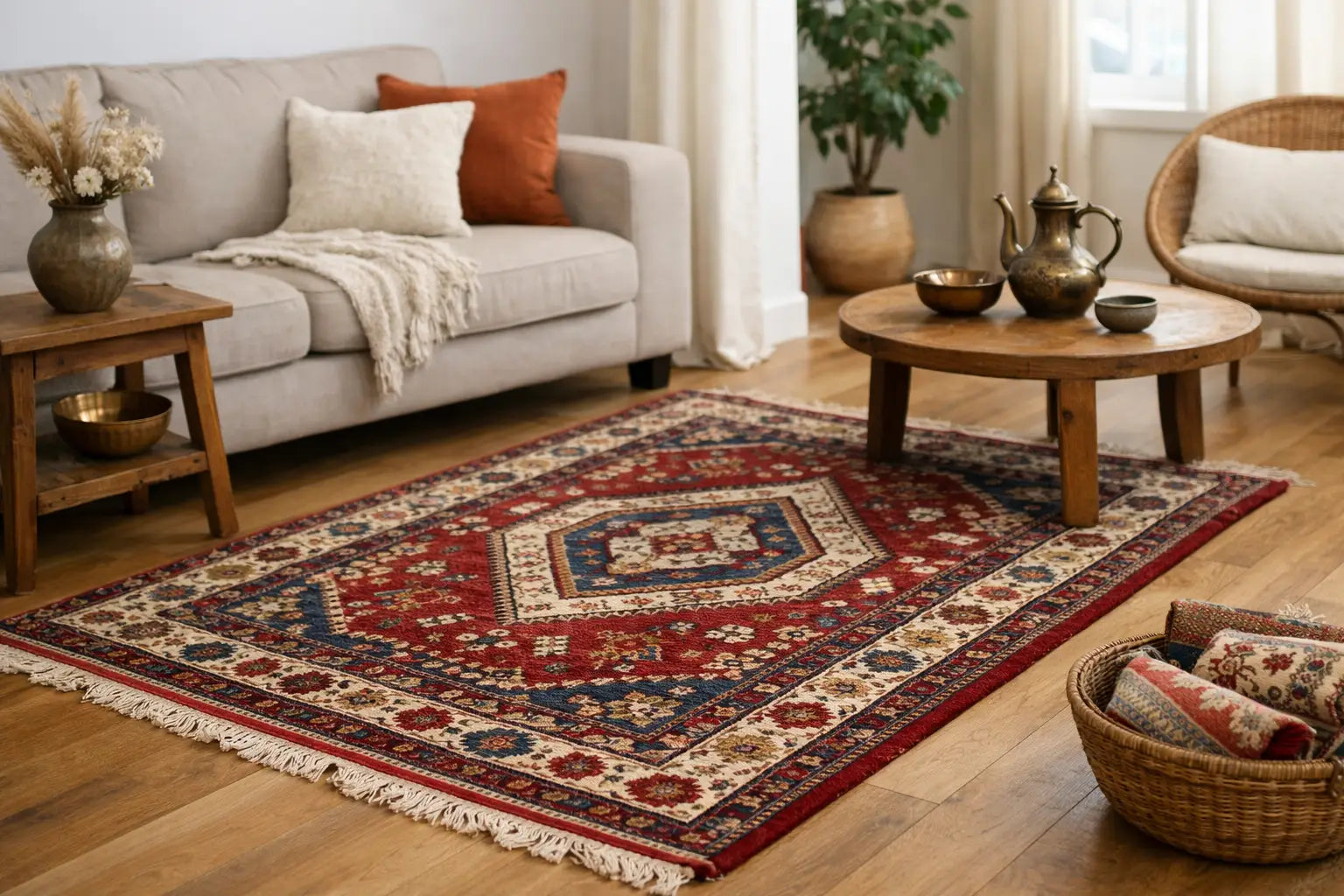
A room can be beautifully furnished and still feel as though something is missing. Often, that missing element is not another piece of furniture, but a layer of history underfoot. Alfombras turcas artesanales have long held that quiet power. They soften architecture, anchor a scheme, and bring into the home a sense of lineage that cannot be imitated by machine-made design.
For those who curate their interiors with intention, a Turkish handmade rug is rarely an afterthought. It is usually the piece that gives the room its emotional register. The patina of hand-dyed wool, the subtle irregularity of the weave, the symbolism carried in each motif - these details create depth that feels instinctively luxurious. Not loud, not trend-led, but deeply assured.
Why alfombras turcas artesanales feel different
The distinction begins with the human hand. In Anatolian weaving traditions, a rug is not merely produced - it is built slowly, knot by knot, by artisans whose knowledge often passes through generations. That process leaves visible traces: a slight shift in pattern, a nuanced variation in colour, a surface that holds light differently from one angle to the next. These are not flaws. They are the signature of authenticity.
There is also the matter of material. Fine Turkish rugs are often woven in wool, cotton, or silk, sometimes in thoughtful combinations that affect both handle and finish. Wool brings warmth, resilience, and a soft matte richness. Cotton gives structure. Silk introduces luminosity and delicacy. The right composition depends on where the rug will live and how it will be used. A family sitting room benefits from durability and softness, while a formal bedroom or private study may welcome a more refined, intricate weave.
Then there is the visual language. Many Turkish designs carry regional identities shaped by landscape, tribe, and craft heritage. Some are geometric and architectural, with strong borders and rhythmic symbols. Others are more floral, more fluid, more decorative. Yet even the most ornate examples retain a sense of discipline. That balance between expression and restraint is one reason they sit so effortlessly within Mediterranean, classical, contemporary, and coastal interiors alike.
The artistry behind Turkish handmade rugs
To understand their appeal, it helps to look beyond appearance. A handmade Turkish rug is not valuable simply because it is old or decorative. Its worth lies in technique, material quality, regional character, and the integrity of its making.
Hand-knotted rugs, for instance, are labour-intensive and often the most enduring. Each knot is tied individually, creating a dense structure that can last for decades when cared for properly. Flatweaves such as kilims offer a lighter profile and a more relaxed presence, making them especially appealing in layered interiors or summer homes where ease matters as much as elegance.
Natural dyes add another dimension. Madder root, indigo, walnut husk, and other botanical sources produce colour with unusual complexity. Rather than appearing flat or synthetic, the tones shift gently throughout the rug. A red may lean terracotta in morning light and deepen towards garnet by evening. This is the sort of visual richness that sophisticated interiors depend on, even when it is felt more than immediately noticed.
For buyers who care about provenance, sourcing matters just as much as aesthetics. A rug selected through direct relationships with artisan workshops carries a different weight from one pulled anonymously from a wholesale catalogue. That connection to place and maker gives the piece cultural integrity, and it gives the buyer something increasingly rare - confidence that beauty has not been separated from origin.
How to choose alfombras turcas artesanales for each room
The most successful rug choices are not made by size alone, though size is certainly crucial. They are made by considering how a room should feel.
In the sitting room, a Turkish rug often works best when it is generous enough to hold the furniture arrangement together. At minimum, the front legs of the sofa and chairs should sit on the rug, but in larger spaces a more expansive placement feels considerably more composed. If the room already has strong upholstery or patterned curtains, a rug with quiet geometry or softly faded colour will bring harmony. If the furnishings are restrained, a more characterful piece can become the room's defining voice.
In the bedroom, softness and calm take precedence. A rug placed beneath the bed should extend beyond the sides enough to be felt underfoot in the morning. Muted rose, stone, sand, faded blue, and warm ivory tones are especially graceful here. They create the atmosphere of retreat without draining the room of personality.
Dining rooms require more discipline. The rug must be large enough that chairs remain on it even when pulled out, otherwise the effect becomes awkward. Flatweaves or lower-pile pieces are often the wiser choice, especially in households where entertaining is frequent. Beauty matters, but so does ease of movement.
In hallways and entrance spaces, Turkish runners offer immediate impact. They lend welcome, rhythm, and a sense of considered arrival. These narrower pieces are especially effective in homes that want to feel layered rather than staged. A well-chosen runner suggests a house with memory.
Colour, age, and the question of patina
One of the most common misconceptions is that a rug must look pristine to feel luxurious. In truth, many of the most coveted Turkish pieces carry gentle age. Fading, softened edges, and slight irregularities can make a rug more, not less, desirable. They bring an atmosphere that new production often struggles to achieve.
That said, it depends on the interior. A crisp, finely detailed new weave can be exactly right in a polished city townhouse or a formal hospitality setting. An older, more weathered piece may suit a coastal villa, a stone-floored country house, or any room seeking warmth and ease. The decision is less about rules and more about emotional tone.
Colour should be approached with the same sensitivity. Turkish rugs rarely need to match a scheme literally. They work best when they echo the room's broader palette - perhaps picking up the chalky blue of painted joinery, the clay note in a ceramic lamp, or the bronze warmth of aged metal. This creates cohesion without making the room feel over-designed.
Living with a Turkish rug beautifully
Luxury should be lived with, not guarded from afar. The beauty of well-made Turkish rugs is that many are both exquisite and practical, particularly when woven in quality wool. They age with grace if treated with respect.
Regular gentle vacuuming helps preserve the fibres, though heavy beater bars are best avoided on delicate or older pieces. Rotation every few months allows wear and light exposure to distribute more evenly. In rooms with strong sun, this small habit makes a meaningful difference over time.
Spills should be addressed promptly by blotting rather than rubbing. For more serious cleaning, specialist care is always preferable. Handmade rugs deserve methods suited to their dyes, fibres, and construction. Thoughtful maintenance does not diminish their ease - it protects the qualities that made them worth choosing in the first place.
For households with children, pets, or frequent guests, this should not be a deterrent. It simply means selecting with honesty. A highly intricate silk piece may not belong in the busiest family zone. A dense wool rug, however, can offer both refinement and resilience. Good design is not about pretending one does not live in a space. It is about choosing pieces that make living there more beautiful.
A more meaningful kind of luxury
There is a reason discerning buyers continue to return to Turkish artisan craft when furnishing a home of substance. These rugs offer more than decoration. They bring texture, heritage, and a certain emotional gravity that mass production cannot replicate.
At Casa Serena Interiores, this is precisely the appeal of pieces shaped by Anatolian hands and traditions. They do not merely fill a floor. They alter the atmosphere of a room, adding soul where there was once only surface.
If you are choosing for a home that should feel collected rather than assembled, alfombras turcas artesanales are rarely a passing indulgence. They become part of the architecture of daily life - stepped on, admired, remembered, and kept. And that may be the most persuasive definition of luxury: something beautiful enough to treasure, and enduring enough to belong.


