


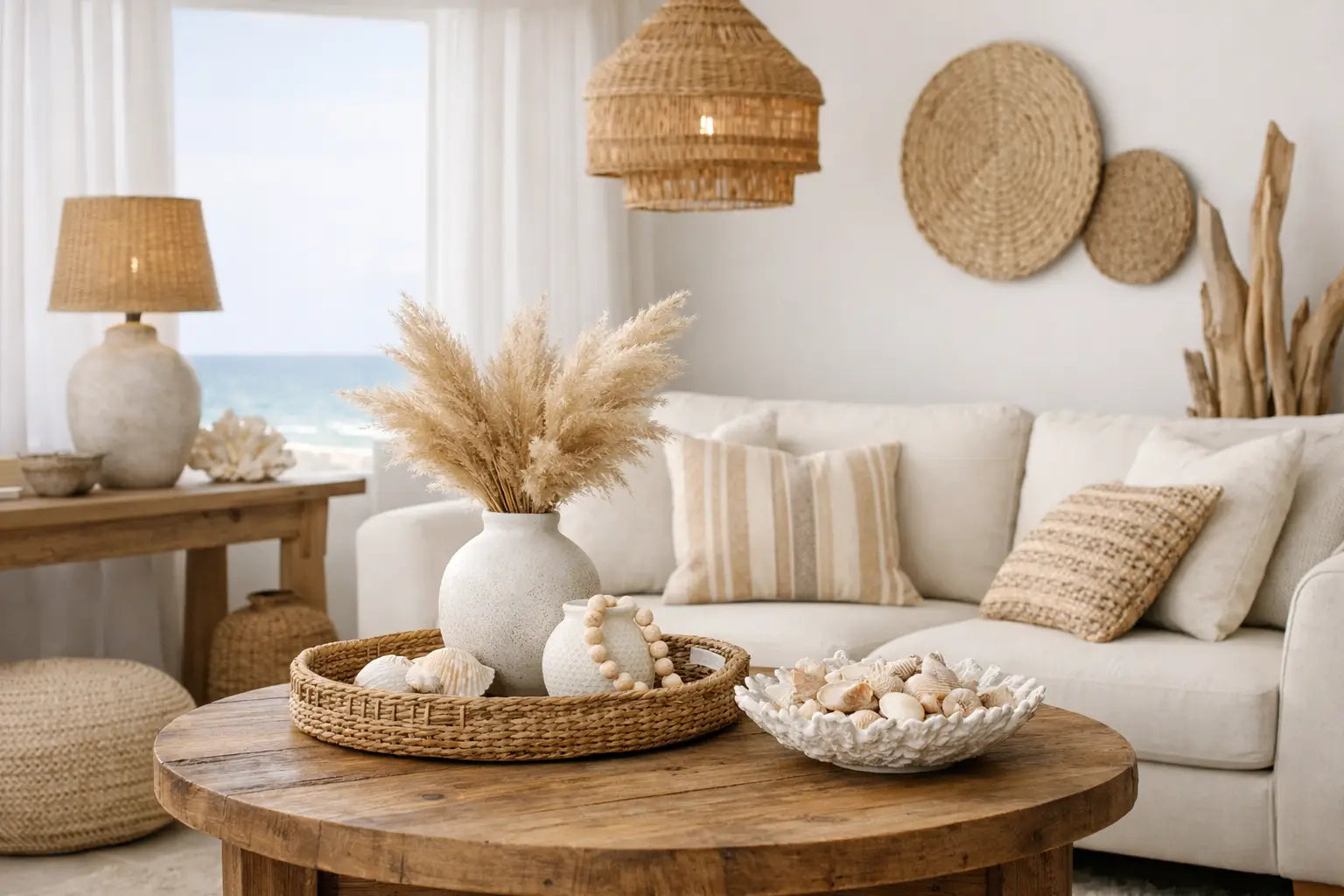
There is a particular disappointment in rooms that claim to feel coastal yet end up looking staged - too much rope, too much whitewash, too little substance. True decoración costera elegante is quieter than that. It is not a theme, and it is certainly not a collection of clichés. It is a way of composing a home that feels sunlit, composed and deeply lived in, where every material carries a sense of place.
For a discerning home, the coastal mood should never come at the expense of refinement. The most memorable interiors balance airiness with depth, freshness with patina, and ease with intention. That is where elegance enters - not in excess, but in restraint.
What makes decoración costera elegante feel truly elevated
An elegant coastal interior is built on atmosphere before objects. The room should suggest salt air, softened light and long afternoons, but through material quality rather than obvious motifs. Linen instead of synthetic blends. Marble instead of imitation stone. Handmade ceramics instead of factory-perfect tableware. The effect is subtle, but it changes everything.
This distinction matters because coastal design can easily slip into the predictable. A striped cushion or driftwood accessory is not inherently wrong, yet when every piece speaks too loudly, the room loses sophistication. Elegance comes from editing. It asks what deserves to remain in view and what should be removed.
The best coastal spaces also resist sterility. A room washed entirely in pale beige may feel calm for a moment, then strangely vacant. By contrast, a layered interior with woven textures, mineral surfaces, brushed metals and artisanal details feels anchored. It carries memory. It invites touch.
The palette: soft, mineral, and never overly sweet
Colour is often the first place where coastal schemes go astray. Bright nautical blues and sharp whites can feel charming in a holiday postcard, but in a permanent home they often read as obvious. A more cultivated palette takes its cues from stone, sand, sea glass, chalk, weathered timber and faded olive groves.
Think oyster, ivory, warm white, pale taupe, sandy beige and muted aqua. Add depth through indigo, mineral green or the blue of old ceramic glaze rather than anything too crisp. The aim is not to mimic the sea literally, but to echo its softness and variation.
This is also where regional character can lift a room. Mediterranean-inspired spaces often benefit from tones that feel sun-warmed rather than icy. Creamier whites, terracotta notes, aged brass and blue details drawn from hand-painted pottery create a richer expression of the coast. They feel cultivated, not contrived.
White needs texture to feel luxurious
White walls are often central to decoración costera elegante, but white alone is never enough. The success lies in how it is handled. Limewashed finishes, slubbed linen, hand-thrown ceramics and matte stone surfaces stop a light palette from feeling flat. They catch shadow, soften glare and give the room a more intimate rhythm.
A pristine showroom white can feel cold in British light, especially in townhouses and period homes. Warmer undertones tend to sit more comfortably, particularly when paired with natural fibres and antique or artisanal accents.
Materials are where the story begins
If coastal style is about ease, elegant coastal style is about honest materials. Rooms gain authority when what you see is real: solid wood with grain, woven cotton with weight, marble with veining, ceramic with irregular glaze, copper with a living finish. These are not merely decorative choices. They establish trust.
Handcrafted objects matter especially here because they soften the polished edges of a scheme. A room with tailored upholstery and beautiful architectural bones can still feel impersonal without the human touch. Add an Iznik-style bowl on a console, a copper tray on a low table, or a peshtemal folded in a bathroom, and the space begins to breathe.
There is also a practical advantage to choosing materials with character. Coastal-inspired living often asks for a certain informality. Pieces should tolerate sun, movement and the rituals of daily life. Washed linen improves with age. Good cotton becomes softer. Proper marble acquires a gentle record of use. Perfection is less compelling than graceful wear.
How to layer décor without losing calm
The paradox of refined coastal interiors is that they appear effortless while being carefully composed. Rooms need enough variation to feel inviting, but not so much that they become busy. Layering should happen through tone, texture and provenance, not clutter.
Start with the largest surfaces. Flooring, rugs, curtains and upholstery set the emotional register of the room. A handwoven rug in faded neutrals can ground a sitting room without making it feel formal. Linen drapery brings movement. Upholstery in oat, ecru or softened blue keeps the atmosphere open.
Then introduce harder materials that add structure. Marble accessories in a bathroom, glazed ceramics on open shelving, or a copper bowl on a dining table create points of contrast. These pieces should not compete with one another. Instead, they should read as if gathered over time.
Décor should feel collected, not matched
Matching sets are often the fastest route to a forgettable room. An elegant home suggests discernment. It hints that the owner chose each piece for its line, texture or story, not because it came from the same display. This is particularly important in coastal design, where sameness can make a room feel like a rental rather than a residence.
A striped cushion may sit beautifully beside a block-printed textile, provided the palette is controlled. A ceramic lamp with a slightly irregular silhouette can elevate a neat console table. A richly woven towel in a guest bathroom can bring more luxury than another decorative ornament ever could.
For those who favour a more pared-back look, fewer pieces of greater quality will always feel more assured than an abundance of inexpensive accents. This is one of the clearest distinctions between decorative coastal styling and genuinely elegant interiors.
Room by room: where coastal elegance works hardest
In the sitting room, the goal is comfort with polish. A low, generous sofa in linen or cotton, a tactile rug, ceramic vessels and ambient lighting usually achieve more than overtly marine references. If the room already has architectural interest, the styling can be even quieter.
In the bedroom, decoración costera elegante should feel restorative rather than thematic. Crisp yet relaxed bedding, a quilted coverlet, stone or marble bedside details and a restrained palette can create a retreat that feels expensive without trying too hard. Here, softness matters more than statement.
Bathrooms are especially receptive to coastal influence because natural stone, cotton and light are already part of the language. This is where artisanal accessories can transform the ordinary. A beautifully weighted soap dish, woven towels and a ceramic vessel for daily essentials bring warmth to spaces that might otherwise feel clinical.
Dining areas invite a slightly more expressive interpretation. Handcrafted table linens, glazed serving pieces and metal accents bring depth and conviviality. There is room here for a stronger blue, a patterned ceramic or a gleam of copper, because hospitality benefits from a little richness.
The role of heritage in a coastal home
Some of the most compelling coastal interiors are not minimalist at all. They carry traces of trade, travel and cultural exchange. This is why Mediterranean and Anatolian references feel so natural in the category. They introduce history into spaces that might otherwise feel too polished.
A hand-finished ceramic, an old-world pattern, a woven textile or a hammered metal tray can all add dimension to a coastal room because they remind us that coastal living has always been connected to movement, craftsmanship and collected beauty. In that sense, the style becomes less about geography and more about sensibility.
This layered approach is particularly resonant for buyers who want their homes to feel distinctive. Casa Serena Interiores understands this beautifully through pieces that bring artisan provenance into contemporary interiors. The result is not a staged seaside look, but something rarer - a home that feels at once worldly, serene and intensely personal.
Common mistakes in decoración costera elegante
The first is over-literal styling. Shells, anchors and overt beach references can flatten a room very quickly. The second is relying on pale colour alone, without enough texture or contrast to sustain interest. The third is buying too much too quickly, which often leaves spaces feeling decorated rather than formed.
There is also the question of balance. Not every home suits the same degree of coastal influence. A city flat may benefit from only a whisper of the style through materials and palette, while a seaside house can absorb more informality and sun-washed character. It depends on the architecture, the light, and how you want the home to be experienced.
The most elegant interiors are rarely the most obvious. They leave space for quiet, for craftsmanship, and for the eye to rest. If your home begins to feel lighter, calmer and more considered - without losing warmth - you are very likely on the right path.


