


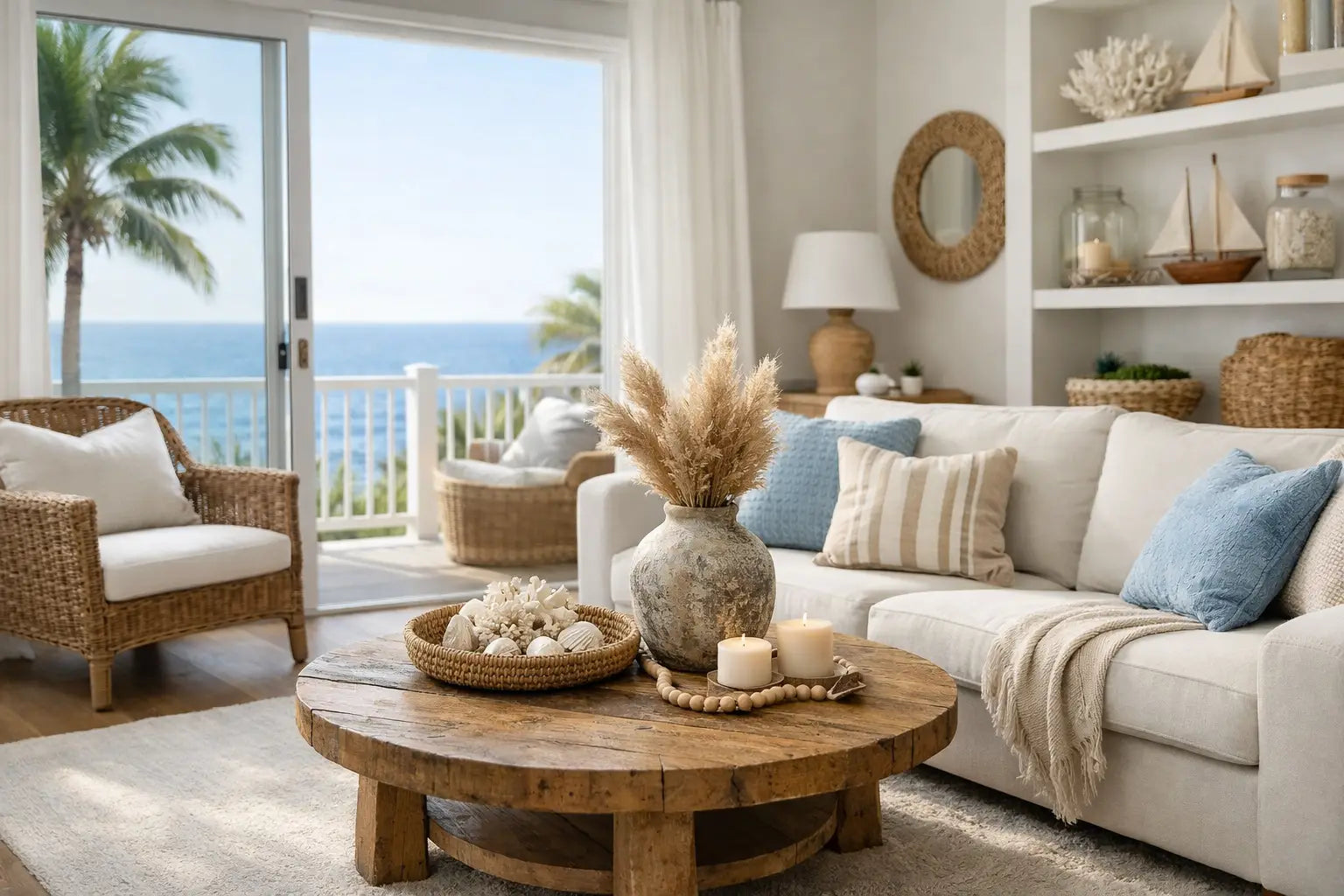
A beautiful coastal sitting room should never feel as though it has been assembled from clichés. No forced nautical motifs, no brittle blue-and-white formula, no room that looks more like a themed holiday let than a home. The most enduring coastal living room decor ideas begin somewhere quieter - in light, texture, craftsmanship and that particular ease a room has when every piece feels chosen rather than bought in haste.
For a more elevated result, coastal style is best understood not as a motif but as an atmosphere. Think sun-softened linen, limewashed tones, weathered wood, ceramics with a hand-finished irregularity, and textiles that carry the touch of the maker. It is less about decorating with shells and more about creating a room that feels airy, grounded and deeply lived in.
What makes coastal living room decor ideas feel luxurious?
Luxury coastal interiors are rarely literal. They borrow from the sea and shoreline through palette and material rather than obvious references. The room should feel open, even if it is modest in scale, and there should be a sense of restraint. Too many themed accessories can flatten the effect. Too little texture can make the scheme feel cold.
The sweet spot lies in balance. A pale room needs depth from woven surfaces, aged metals, marble, ceramic glaze and natural fibres. A richer Mediterranean approach may welcome sandy terracotta, olive wood and deeper blues, but the principle remains the same - every element should contribute to calm without becoming bland.
Start with the light in the room
Before choosing a rug or cushion, pay attention to the way daylight moves across the space. In a south-facing room, chalky whites and soft oyster tones can look radiant. In cooler light, warmer ivories, stone and muted putty often feel more flattering than stark white. Coastal interiors are supposed to feel sun-warmed, not clinical.
This is also where finish matters. Matte walls, washed woods and gently slubbed textiles catch light in a softer way than glossy surfaces. If a room already has strong architectural character, let that lead. If it does not, texture can create the same sense of depth.
Coastal living room decor ideas that feel collected, not contrived
The easiest way to lose sophistication is to make everything match. A truly inviting coastal room has variation - old against new, refined against rustic, smooth against tactile. That tension gives the room life.
1. Build the palette from sand, salt and stone
A coastal palette need not be all blue. In fact, many of the most beautiful schemes barely use it. Begin with shades that feel elemental: warm white, shell, flax, pale taupe, limestone and muted grey-green. Then decide whether the room needs a cooler marine note or a warmer Mediterranean one.
If you love blue, use it with discipline. A faded indigo stripe, a glazed ceramic lamp base or a cushion with a washed mineral tone can be enough. When every surface repeats the same seaside shade, the room begins to look staged.
2. Choose one anchoring rug with soul
A rug often determines whether a coastal room feels expensive or unfinished. Machine-perfect pieces can work in some settings, but artisan rugs bring a weight and subtle irregularity that instantly enrich the space. A handwoven Turkish rug, especially in softened neutrals, weathered blues or sun-faded terracotta, offers both structure and history.
There is also a practical trade-off here. A very pale rug creates lightness but may ask more of you in a busy family room. A piece with gentle patterning or tonal variation is often the wiser choice, particularly if the room is heavily used. Beauty lasts longer when it can tolerate real life.
3. Layer linen, cotton and handwoven texture
Coastal rooms depend on softness, but not the overstuffed sort. Slipcovered seating, relaxed linen curtains and cushions in tactile weaves bring ease without making the room feel careless. The key is to mix textures within a restrained palette so the room feels nuanced rather than busy.
Peshtemal-inspired textiles work beautifully here because they add a lighter, more refined texture than heavy throws. Fold one over an armchair, drape one across a sofa or use it to soften the edge of a woven basket. These details create movement and informality in the gentlest way.
4. Bring in ceramics with a human touch
One of the strongest alternatives to generic coastal accessories is artisan ceramic work. Bowls, vases and decorative plates in soft whites, mineral blues or hand-painted patterns introduce a sense of provenance that mass-produced décor simply cannot imitate.
Iznik-inspired ceramics can be especially striking in a coastal setting when used sparingly. A single platter on a wall, a pair of porcelain jars on a console, or a bowl placed on a marble-topped coffee table can add decorative rhythm without disturbing the calm. This is where heritage becomes atmosphere.
5. Use wood that feels sun-aged, not orange
Wood is essential in coastal interiors because it adds warmth to pale schemes. The wrong wood, however, can pull a room away from the look entirely. Heavy red undertones or overly glossy finishes tend to feel formal rather than relaxed.
Look instead for oak, ash, elm or reclaimed finishes with a dry, softened character. A bleached side table, a carved stool or a simple timber console can add just enough rustic honesty. If your existing wood is darker, balance it with lighter textiles and stone so the room stays airy.
6. Add metal in a mellow way
Polished chrome can feel too sharp in this setting. Coastal interiors usually favour metal with patina - antique brass, brushed bronze or hand-finished copper that reflects light more warmly.
A copper tray, a small lamp base or subtle metal detailing on a side table is often all you need. The point is not shine for its own sake. It is contrast. Against linen, wood and plaster-like walls, metal introduces a quiet gleam that keeps the room from feeling flat.
7. Style the coffee table with fewer, better things
A coastal room should breathe. Overfilling every surface with decorative objects undermines that mood almost immediately. On a coffee table, choose pieces with sculptural value: a marble box, a candle in a ceramic vessel, a bowl with handmade character, and perhaps one art book that reflects your sensibility.
The same rule applies to shelves. Leave space around objects. Let each piece register. A room feels more luxurious when it does not insist on itself.
8. Introduce blue through pattern, not theme
If you want a stronger coastal signal, stripes are usually more elegant than overt seaside imagery. A woven stripe cushion, a subtle border on linen or a rug with faded linear motifs can suggest maritime ease without becoming predictable.
This is especially useful in town houses or city flats where a literal beach-house aesthetic may feel disconnected from the architecture. Pattern allows the room to nod to coastal references while still feeling grounded in its setting.
9. Let scent and atmosphere complete the room
Décor is only part of the experience. A coastal sitting room should feel transporting in a sensory way, and scent has a quiet role here. Candles or diffusers with notes of fig leaf, neroli, sea salt, citrus peel or dry herbs can support the mood beautifully.
Choose fragrances with restraint. Anything overly sweet or synthetic will fight with the natural elegance of the room. The goal is the impression of open windows, sun-warmed textiles and clean air after the tide.
The Mediterranean interpretation of coastal style
For many discerning homes, the most compelling coastal aesthetic is not New England but Mediterranean. It carries more warmth, more history and a greater tolerance for imperfection. Instead of crisp navy and white, think chalk, olive, faded azure, travertine, old copper and handmade ceramics with irregular glazing.
This approach suits interiors that want depth as well as freshness. It also makes more room for artisan pieces with visible craft. At Casa Serena Interiores, this sensibility is central - coastal living is elevated through Turkish textiles, ceramics, marble and objects that carry the memory of place in their surfaces.
When to keep it minimal and when to enrich it
Not every room wants the same treatment. A small sitting room with generous light may benefit from restraint: one fine rug, soft curtains, a few cushions, a ceramic accent and a beautiful lamp. A larger room with higher ceilings can hold more layering, including richer woven textures, bolder ceramics and substantial occasional furniture.
It also depends on how you live. If the room is used for daily family life, practical fabrics and forgiving finishes matter. If it is a quieter reception room, you can be more delicate in your choices. Coastal style should never ask you to preserve a room rather than enjoy it.
The loveliest coastal interiors feel as though they have been shaped by memory, travel and instinct, not trend. Choose pieces with texture, provenance and patience, and the room will begin to hold that rare balance between refinement and ease - the kind that makes everyone who enters exhale a little more slowly.


