


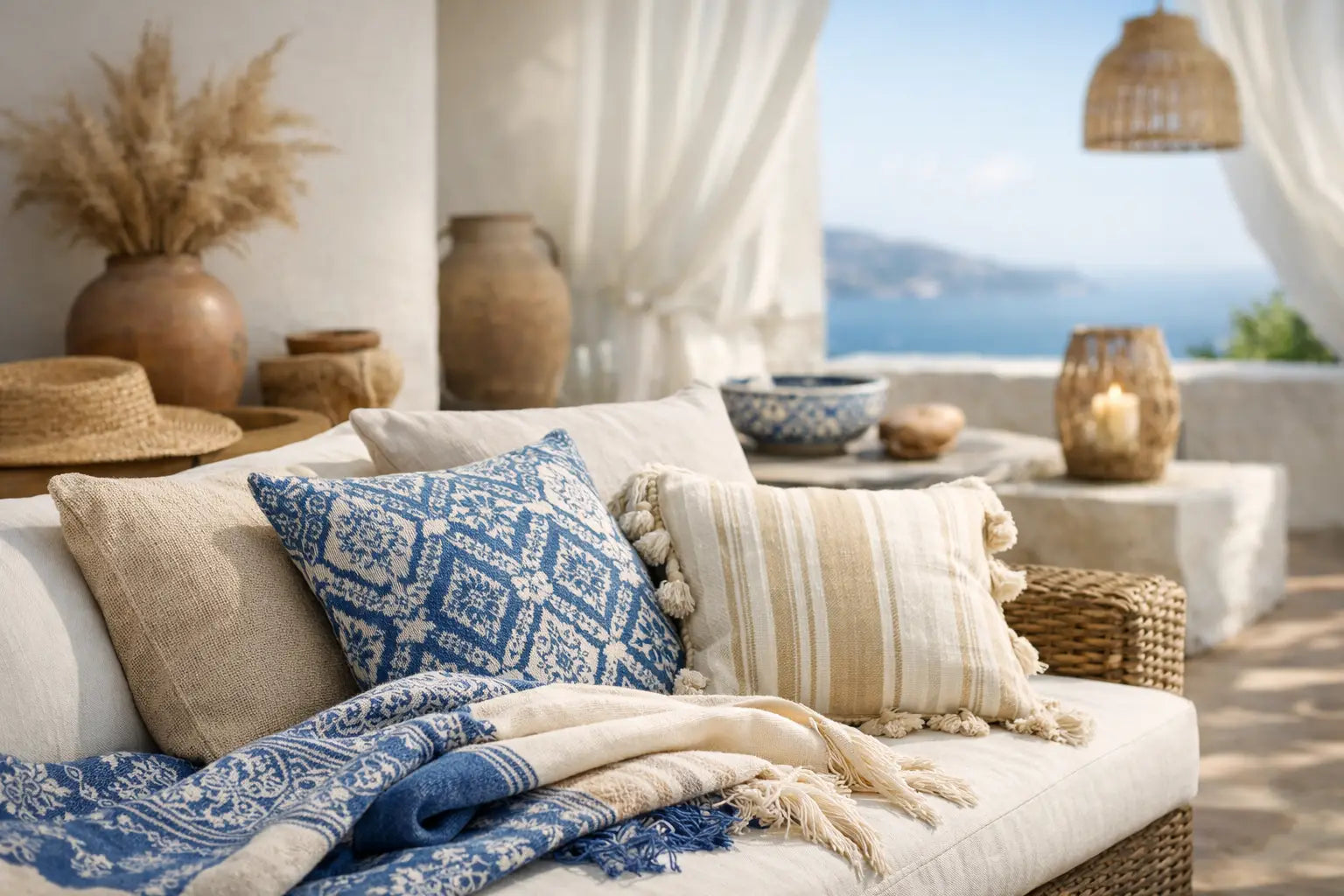
There is a fine line between a room that feels sun-washed and cultivated, and one that slips into theme. That is exactly why understanding how to combine elegant Mediterranean textiles matters. The most beautiful Mediterranean interiors are never assembled by formula. They are layered with restraint, memory and material intelligence, allowing linen, cotton, kilim weave and hand-finished detail to speak in a language of quiet luxury.
How to combine elegant Mediterranean textiles without losing refinement
Elegant Mediterranean textile styling begins not with pattern, but with atmosphere. Before choosing a cushion, throw or table linen, consider the emotional register of the room. Is it meant to feel airy and coastal, intimate and dusky, or softly architectural? Mediterranean design at its most elevated is less about motifs and more about balance - chalky neutrals against mineral blues, tactile weaves against cool stone, artisanal detail against uncluttered space.
A common mistake is to use too many overtly “Mediterranean” references at once. Blue stripes, lemon prints, tassels, heavy embroidery and rustic ceramics can quickly compete. A more discerning approach is to anchor the room with two constants: a restrained palette and a hierarchy of texture. Once those are in place, heritage pieces feel considered rather than decorative.
In practice, that often means starting with foundational fabrics in washed linen, softened cotton or lightly slubbed blends. These establish ease. Then a more distinctive textile - perhaps a handwoven Anatolian cushion, a peshtemal with a fine stripe, or a kilim-inspired accent - introduces lineage and personality. The room feels collected, not crowded.
Start with the palette, not the pattern
The Mediterranean palette is often misunderstood as simply blue and white. In refined interiors, it is usually broader and more nuanced than that. Think limestone, olive leaf, clay, sea salt, faded fig, sand, tobacco and the deep blue of evening water. These tones create a composure that allows artisanal textiles to sit naturally within the room.
If your space already has strong architectural features - terracotta flooring, exposed timber, limewash walls or veined marble - keep the textiles softer in tone. Off-white linen curtains, oat-coloured upholstery and a muted indigo throw can be enough. When the room itself is more neutral or contemporary, textiles can carry greater warmth through saffron, rust, sage or dusky teal.
This is where taste reveals itself. Contrast is essential, but harsh contrast rarely feels luxurious. Instead of bright white against primary blue, choose ivory against ink, or stone against softened cobalt. The result is gentler, richer and far more enduring.
A note on layering colour
Layering works best when one tone leads, one supports and one accents. A room of sand-coloured upholstery and chalky walls might take olive and faded blue beautifully. A cooler room with greyed stone and pale oak may need warmer linen, tobacco stripes or terracotta embroidery to avoid feeling remote. The aim is not perfect matching. It is tonal conversation.
Texture is what gives Mediterranean interiors their soul
If colour sets the mood, texture creates the seduction. Mediterranean rooms invite touch. They rely on surfaces that hold light differently throughout the day - a stonewashed bedspread, a fringed hand towel, a woven cushion with subtle irregularity, a tablecloth that falls with weight and softness.
To combine textiles elegantly, vary the hand-feel. Pair crisp linen with nubbled weave, smooth cotton with weightier handloomed cloth, and refined embroidery with plain washed finishes. When everything has the same texture, the room feels flat. When every piece clamours for attention, it feels staged.
The most sophisticated rooms usually carry one heroic textile moment only. In a sitting room, that might be a vintage-style rug with a faded Anatolian character. In a bedroom, it may be a deeply tactile coverlet with hand-finished edges. In a dining setting, the statement may come from generous linen in a mineral tone, grounded by glazed ceramics and warm metal. Once that focal note is established, the supporting textiles should become quieter.
How much texture is too much?
It depends on the scale of the room and the amount of visual rest. In a compact flat, heavy layering can quickly feel oppressive, especially if furniture is dark or ornate. In a larger coastal home with natural light and open sightlines, more texture can be absorbed beautifully. The rule is simple: the richer the materials, the calmer the composition should be.
Mix origins with intention
Some of the most compelling Mediterranean interiors borrow across shorelines. A Turkish peshtemal can sit beside Italian linen, a Greek-inspired striped cushion can work with an Anatolian kilim, and Iznik-influenced motifs can feel exquisite in a room otherwise edited to near-minimalism. The elegance lies in respecting shared sensibilities - craft, natural material, faded pigment, human touch - rather than forcing strict geographic purity.
This is especially relevant when working with artisan-made pieces. Handcrafted textiles carry slight irregularities, and that is part of their allure. They should not be treated as props. A woven cushion with subtle variation in stripe or a table runner with hand-finished selvedge brings presence to a room because it feels alive. Casa Serena understands this instinctively: provenance is not an accessory to style, but part of what gives a home its emotional authority.
When mixing textile traditions, keep one thread consistent. That thread may be palette, material or scale. If the patterns differ, let the colours relate. If the colours vary, keep the fibres natural and matte. If you are combining stripes with geometric motifs, make sure one reads bolder and the other quieter.
How to combine elegant Mediterranean textiles by room
Each room asks for a slightly different expression of Mediterranean elegance. The living room benefits from depth and contrast. Begin with an understated base - neutral upholstery, natural flooring, simple curtains - then introduce crafted softness through cushions, a throw and perhaps a rug with timeworn pattern. Avoid overfilling the sofa. Two or three exceptional cushions will often say more than six generic ones.
In the bedroom, serenity should lead. Choose bedding in washed white, ivory or pale stone, then layer a quilted coverlet or folded throw at the foot of the bed in muted blue, olive or clay. Texture matters more than print here. A single embroidered cushion or striped lumbar can add enough character without disturbing the calm.
Bathrooms and poolside spaces are where Mediterranean styling can become either chic or predictable. The difference lies in material quality. A beautifully woven peshtemal in soft, mineral tones always feels more refined than bulky, over-dyed towels. Add contrast with marble accessories, hammered metal details or ceramic vessels rather than resorting to obvious seaside motifs.
At the table, elegance comes from generosity. A substantial linen cloth, relaxed but well cut, transforms even a simple meal. Napkins in a related tone, perhaps with subtle stripe or contrast stitch, create depth without fuss. Here again, restraint is the true luxury. The table should feel abundant, never busy.
Pattern needs air around it
One of the easiest ways to elevate Mediterranean textiles is to give patterned pieces breathing space. A kilim-style cushion becomes more striking against plain upholstery. A striped throw reads better on a simple bed. A patterned runner feels more sophisticated on an uncluttered table.
This is especially important with heritage-inspired motifs. Tile references, geometric repeats and folkloric details carry visual history. They deserve room. If every surface is patterned, the eye loses the hierarchy and the room starts to feel like a set rather than a home.
Scale also matters. If your rug has a bold pattern, keep cushions smaller in motif or nearly solid. If your curtains carry a stripe, choose quieter upholstery. When the scales are too similar, pieces compete. When they vary, the composition feels effortless.
The finishing touch is always restraint
Luxury in Mediterranean interiors does not come from abundance alone. It comes from editing. Knowing what to leave out is just as valuable as choosing the right textile in the first place. A room with fewer, better pieces carries more confidence than one crowded with references.
Choose textiles that age well in both material and spirit. Linen that softens, cotton that holds its character, woven pieces that reveal the hand of the maker, colours that fade gracefully rather than date quickly. These are the details that turn decoration into atmosphere.
When you are deciding between one more layer and stopping, stop a moment earlier than you think. Let the room breathe. Let the craftsmanship be visible. Let the home feel as though it has been shaped over time, not finished in a weekend.
That is usually the difference between a space that merely looks Mediterranean and one that feels quietly, unmistakably elegant.


