


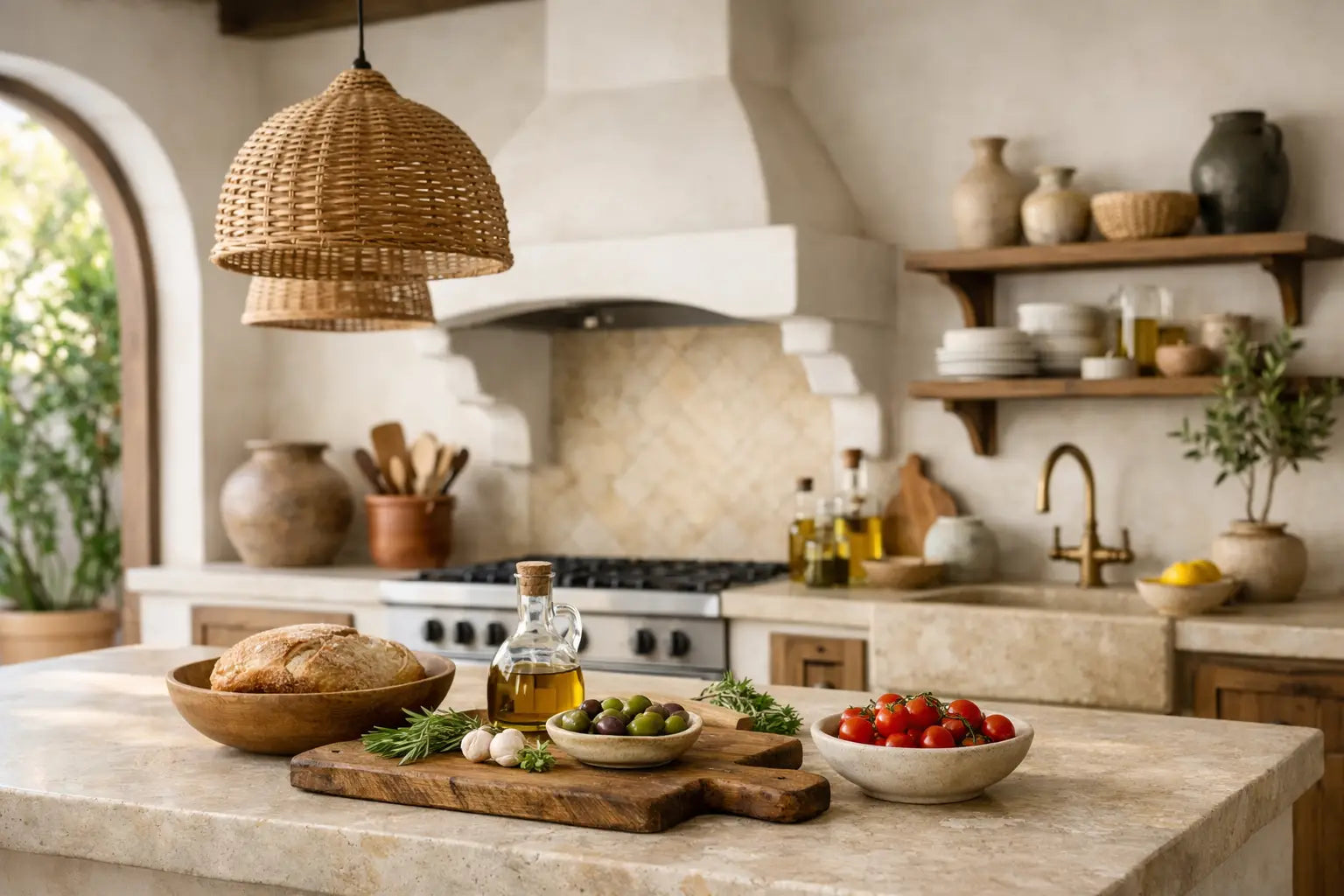
A Mediterranean kitchen should never feel showroom-perfect. The beauty lies in a room that has gathered its character over time - sun-washed surfaces, honest materials, a touch of patina, and objects that feel chosen rather than merely matched. The most compelling Mediterranean kitchen styling ideas begin there, with the understanding that this is not a trend to copy but an atmosphere to compose.
For design-conscious homes, that atmosphere is built through restraint as much as richness. A Mediterranean kitchen can be luminous and pared back, or deeply layered and old-world, but it should always feel grounded in materiality. Stone, clay, linen, wood and hand-finished metal do much of the work. What matters is not how much you add, but whether each element carries warmth, heritage and ease.
Mediterranean kitchen styling ideas start with the palette
The fastest way to lose the mood is to make the palette too cold or too busy. Mediterranean interiors tend to draw from nature rather than from paint charts - chalky white, olive, sand, terracotta, fig, sea-glass blue and the warm brown of aged timber. These shades create depth without harsh contrast, which is especially important in a kitchen where hard surfaces can otherwise feel clinical.
If your cabinetry is already in place, you do not need a complete renovation to shift the tone. Cream walls, tactile ceramics on open shelves, washed linen tea towels and a few pieces in deep cobalt or green can soften a standard kitchen considerably. If you are starting from scratch, avoid stark brilliant white paired with glossy finishes. It may look crisp, but it rarely feels Mediterranean.
There is, however, a balance to strike. Too much terracotta and dark wood can tip the room into heaviness, particularly in British homes with less direct sunlight than coastal properties in southern Europe. In those spaces, paler stone tones and glazed ceramics help keep the room airy while still delivering warmth.
Choose materials that improve with age
Mediterranean style is intimately tied to time. A veined marble board that develops a gentle wear pattern, a copper pan that deepens in tone, a hand-thrown bowl with slight irregularities - these are the details that make a kitchen feel lived in and quietly luxurious.
Natural stone is one of the strongest anchors. Marble, travertine and limestone all bring a sense of permanence, though each has a different temperament. Marble feels elegant and cool under hand, ideal for refined spaces with a more polished edge. Travertine is softer and more rustic. Limestone can be beautiful, but it requires thought in a working kitchen as it marks more easily. The right choice depends on whether you want your kitchen to feel tailored or gently timeworn.
Wood should also feel substantial rather than overly processed. Think oak shelving, a walnut stool, an aged chopping board leaned against a splashback. Even a small amount of real wood can counterbalance stone and tile, making the room feel more intimate.
Let ceramics carry the personality
If there is one category that instantly lends soul to a Mediterranean kitchen, it is ceramics. Not decorative clutter, but pieces with purpose and presence - serving platters, olive bowls, water jugs, utensil jars and plates that can move from shelf to table with grace.
Handcrafted ceramics bring variation in glaze, edge and tone that factory-made pieces simply cannot mimic convincingly. Iznik-inspired patterns, soft crackle glazes, painterly blue and white, or earthy unglazed finishes all work beautifully, depending on the mood you want to create. In a quieter kitchen, a cluster of patterned plates can provide the visual heartbeat. In a more layered interior, plain artisanal forms may offer the needed calm.
This is where styling becomes a matter of editing. Open shelving should not become storage on display. Leave space around beautiful objects so that each piece can be seen. A stack of plates, a ceramic pitcher, a bowl of lemons, perhaps a copper detail nearby - often that is enough.
Mediterranean kitchen styling ideas for worktops and shelves
The most inviting Mediterranean kitchens feel gently provisioned, as if lunch could be assembled at any moment. Worktops should not be crowded, yet they should hold a few useful, beautiful things in plain sight. Olive oil in a handsome bottle, a marble salt cellar, a wooden board, a ceramic fruit bowl and a linen cloth create that impression of effortless hospitality.
Shelves benefit from a similar discipline. Group objects by material or tone rather than trying to display everything at once. White and blue ceramics together can feel fresh and coastal. Earth-toned pottery paired with copper accents feels more sun-baked and old-world. Mixing both can work, but only if the palette remains coherent.
Fresh produce matters more than many people realise. Artichokes, aubergines, figs, lemons, garlic and herbs in simple bowls or bunches add colour with a natural irregularity that suits the style. They also prevent the kitchen from feeling staged. Mediterranean rooms are sensual; they should hint at cooking, gathering and appetite.
Bring in metal with warmth, not shine
Metal is essential in a Mediterranean kitchen, but the finish is everything. Highly reflective chrome tends to feel too modern and sharp for this aesthetic. Aged brass, copper and iron are more sympathetic choices because they carry depth and a subtle sense of history.
Copper serveware is particularly effective because it bridges utility and beauty. Left visible on a rail, shelf or dresser, it introduces warmth that catches the light without looking flashy. Brass taps and handles can do the same, especially against stone, cream cabinetry or patterned tile. Blackened iron works well in more rustic schemes, though it can feel severe if the rest of the room lacks softness.
The key is not to over-coordinate. Mixed metals can be lovely when one finish leads and another appears in smaller notes. A kitchen that matches every handle, lamp and utensil too precisely often loses the relaxed elegance that makes Mediterranean interiors so appealing.
Textiles are what make the room feel inhabited
Luxury in a kitchen does not come only from stone and joinery. It also comes from what softens them. Linen runners, woven cushions on a breakfast bench, a striped peshtemal draped over an oven handle, or a curtain beneath a sink can make the room feel deeply personal.
Textiles are especially useful if your kitchen architecture is fairly standard and you want to introduce Mediterranean character without structural change. They add movement, absorb light and bring in the artisanal touch that hard finishes alone cannot provide. Choose natural fibres and colours with a faded, sun-kept quality rather than anything too bright or synthetic.
There is a practical note here. Kitchens are hardworking spaces, so fabrics must earn their place. Washable linen and cotton are sensible choices, while delicate trims are better reserved for less exposed areas. Beauty should never make a room feel untouchable.
Use lighting to create evening warmth
Many kitchens look acceptable by day and disappoint entirely after dusk. Mediterranean interiors, by contrast, are often most seductive in the evening, when light settles into stone, glaze and metal.
Aim for layered lighting rather than a single harsh ceiling source. Pendant lights over an island or table can establish atmosphere, while wall lights or smaller lamps soften the perimeter. Materials matter here too. Glass, ceramic, brass and textured shades all lend warmth. If your kitchen has open shelving, a discreet light source can give ceramics and glassware a quiet glow.
Candles also have a place, not as theatre, but as ritual. A softly scented candle lit while supper cooks changes the emotional temperature of the room. It signals that the kitchen is not just for tasks. It is for living.
Honour imperfection and provenance
The finest Mediterranean spaces rarely feel newly purchased in one sweep. They feel assembled with discernment. That means allowing for variation: a slightly uneven glaze, a hand-hammered rim, timber with visible grain, marble with dramatic veining. These details are not flaws to disguise. They are what give a room integrity.
For buyers who care about authenticity, provenance matters as much as appearance. A serving bowl from an artisan workshop, a woven textile with regional heritage, or a hand-finished marble piece brings a different emotional weight into the home. You feel it every time you use it. That is why curated pieces from houses such as Casa Serena Interiores resonate so strongly - they offer not just style, but lineage.
This approach also prevents the room from slipping into imitation. Mediterranean style can look contrived when every reference is obvious and overly themed. You do not need faux rustic signs, excessive motifs or a kitchen full of props. A few heirloom-quality objects, chosen for material and story, will always say more.
Think of the kitchen as a room for receiving
Perhaps the most useful test of all is this: does the kitchen invite people to linger? Mediterranean style is inseparable from hospitality. Even the smallest kitchen should suggest welcome, whether through a bowl of citrus on the table, a beautiful water jug left out, or seating that encourages someone to stay and talk while you cook.
That does not require a grand country house kitchen. It requires intention. A compact London terrace kitchen can still carry Mediterranean grace if it is styled with warmth, natural materials and a sense of quiet abundance. A larger family kitchen may allow for more layering, but it still benefits from the same principle - every visible object should contribute to beauty or ritual, ideally both.
The loveliest kitchens are not those that chase perfection. They are the ones that feel sunlit in spirit, generous in detail and rooted in a way of living that values craft, pleasure and permanence. Start there, and the room will begin to tell its own story.


