


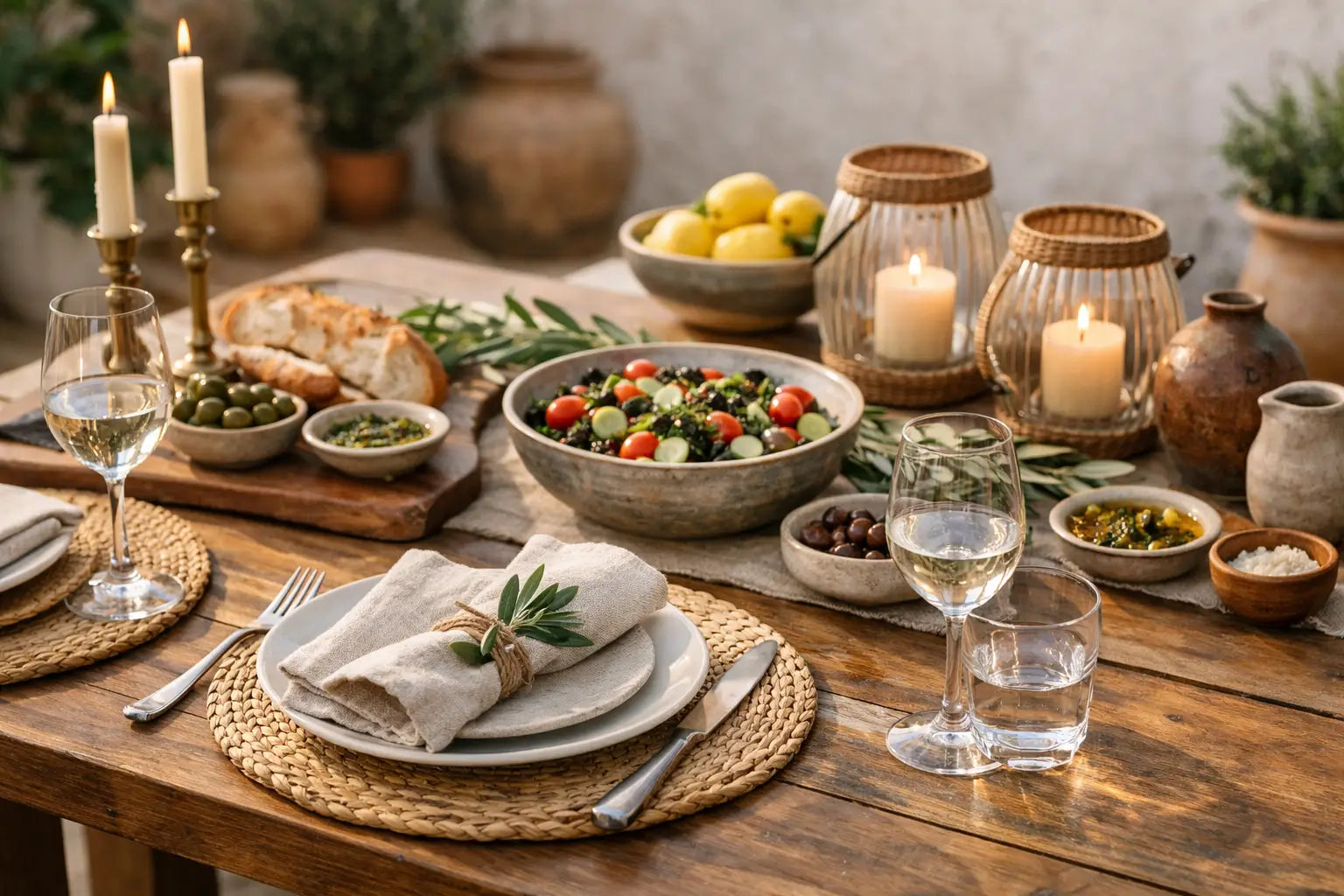
A Mediterranean table should never look as though it has been arranged with tweezers. Its beauty lies in ease - sun-washed linen, glazed ceramics, a bowl of citrus, the quiet gleam of copper in candlelight. If you are wondering how to style a Mediterranean dining table, the goal is not perfection. It is atmosphere, generosity and a sense that every object has lived a life before it reached your home.
What defines a Mediterranean dining table
The Mediterranean look is often reduced to blue and white stripes, but the real language is richer than that. It is shaped by material honesty, regional craft and the feeling of a meal that stretches lazily into the evening. Stone, linen, olive wood, ceramic, brass, copper and hand-finished glass all belong here because they age beautifully and hold character.
There is also a balance to strike. A Greek-island freshness leans crisp and airy, with chalky whites and sea tones. A more Anatolian or southern Mediterranean table brings in warmer notes - terracotta, saffron, deep cobalt, aged metal and intricate pattern. Neither is more correct. The most compelling tables borrow from both, keeping the palette restrained while allowing texture and provenance to do the work.
How to style a Mediterranean dining table from the base up
Start with the table itself, or more precisely, with what you allow to remain visible. Mediterranean styling is rarely about covering every surface. If you have a beautiful timber table, let some of that grain breathe. A full cloth can feel too formal unless you are hosting an evening meal. For everyday elegance, a linen runner or a pair of generous placemats often creates a more relaxed composition.
Choose linen that looks better slightly creased than sharply pressed. This matters. The charm of the style lies in softness and movement, not stiffness. Think washed white, oat, olive, faded blue or a sun-baked terracotta. If your ceramics are patterned, keep the linen quieter. If your dinnerware is plain, the textile can carry a little more visual weight through weave, embroidery or a subtle border.
The easiest mistake is over-theming. A table loaded with anchors, shells and overt coastal motifs loses the grown-up ease that makes Mediterranean interiors so magnetic. Instead, build from natural materials and let the reference stay implicit.
Use ceramics with soul
Ceramics are where the table begins to speak. Hand-painted plates, softly irregular serving bowls and glazed dishes with tonal variation bring life that factory-perfect pieces never can. Iznik-inspired patterns, painterly stripes, or simple off-white stoneware all work, depending on how expressive you want the setting to feel.
If you are styling for a quieter lunch table, keep the place setting simple and allow one statement serving piece at the centre. For a dinner party, layering becomes more seductive - a charger, dinner plate and smaller dish can feel sumptuous, especially when each piece has a slightly artisanal finish.
Matching sets are not essential. In fact, a little variation often feels more collected. The caveat is that there should still be a thread connecting everything, whether that is colour, glaze, shape or origin. A table that feels curated is always more elegant than one that feels randomly assembled.
Bring in warm metal accents
Mediterranean tables are warmed by metal, but the shine should feel mellow rather than flashy. Copper serveware, brass candlesticks, a hammered tray or a small metal bowl can add depth and evening glamour without overwhelming the setting.
This is especially useful if your palette is pale. White linen and ceramic can feel beautiful but slightly flat on their own. A touch of warm metal gives the table a heartbeat. It also catches candlelight in a way that immediately softens the room.
If you are serving food family-style, a copper serving dish or handled tray can become part of the visual story rather than something brought in as an afterthought. The meal itself should feel woven into the styling.
Colour and texture matter more than strict rules
When people ask how to style a Mediterranean dining table, they are often really asking which colours to use. The answer is less prescriptive than most guides suggest. Mediterranean spaces are shaped by landscape, and landscape is never one-note.
A coastal table might centre on chalk white, faded aqua, soft blue and sandy neutrals. A more dramatic scheme can introduce olive green, rust, pomegranate, fig or deep indigo. The trick is to keep the colours slightly dusty and sun-touched rather than bright and synthetic.
Texture is what keeps these colours sophisticated. Crisp linen against rough ceramic, polished marble beside weathered wood, glossy glaze near matte woven fibres - these contrasts create depth. Without them, even expensive pieces can feel visually thin.
Add a centrepiece that looks gathered, not staged
The centre of the table should feel abundant but never cumbersome. A low arrangement is usually more graceful than something tall and obstructive. You want guests to see one another easily, and you want serving dishes to have room to land.
A bowl of lemons or figs, clipped olive branches in a ceramic jug, potted herbs, or a cluster of candles is often enough. Seasonal produce works particularly well because it brings colour, scent and a kind of unforced opulence. There is luxury in restraint when the ingredients are beautiful.
Flowers can work too, but avoid anything too polished or formal. Mediterranean styling prefers looseness - stems that bend, leaves that spill, arrangements that feel as if they were made in five minutes by someone with very good taste.
Layer for occasion, not for excess
One of the most useful principles is to style according to the rhythm of the meal. An everyday breakfast table calls for less than a long summer supper. The Mediterranean sensibility is hospitable, but it is not cluttered for the sake of it.
For daily use, a runner, ceramic plates, tactile glasses and one central object may be all you need. For entertaining, add folded napkins, candlelight, serving platters, extra bowls and perhaps a small dish of olives or sea salt at each end of the table. The table should feel fuller because the occasion asks for it, not because you are trying to prove a point.
This distinction is important in smaller dining rooms. If the space is compact, too many layers can make the setting feel heavy. In that case, choose fewer pieces with more presence - a beautifully woven linen, artisan plates and one striking centre vessel may create more impact than six competing details.
Glassware and finishing details
Glassware often decides whether the table feels truly considered. Choose glasses with a hint of irregularity, a soft tint, or a hand-blown character if possible. Perfectly uniform stemware can sometimes look too formal against the relaxed spirit of Mediterranean dining.
Napkins should feel generous and tactile. Tie them simply, fold them loosely, or place them beneath the plate for a softer line. Napkin rings are optional; if used, they should feel crafted, not ornate.
Small finishing details matter more than people realise. A marble salt cellar, a little dish for lemon wedges, a hand-thrown jug for water, or slender candles in aged brass holders all contribute to the impression that the table has been composed with care. At Casa Serena Interiores, this is precisely where artisan pieces earn their place - not as decoration alone, but as the quiet signatures that give a table depth and memory.
The mood is as important as the objects
A beautifully styled table can still fall flat if the mood around it is wrong. Mediterranean dining is sensual and unhurried. Lighting should be gentle. Candles help, but so does avoiding anything too cold or stark overhead. The table should invite people to settle in.
Think about fragrance too, though with restraint. You want the scent of food, citrus, herbs and warm bread to lead. If you use candles or diffusers nearby, choose something subtle that will not compete with the meal.
And finally, leave a little room for life to happen. The most memorable tables do not remain pristine for long. Bread is broken, wine is poured, napkins are moved, bowls are passed from hand to hand. That is not the undoing of the styling. It is the final layer of it.
A Mediterranean dining table should feel collected, generous and deeply personal - less like a showroom, more like a home with stories in its walls and sunlight on its linen.


