


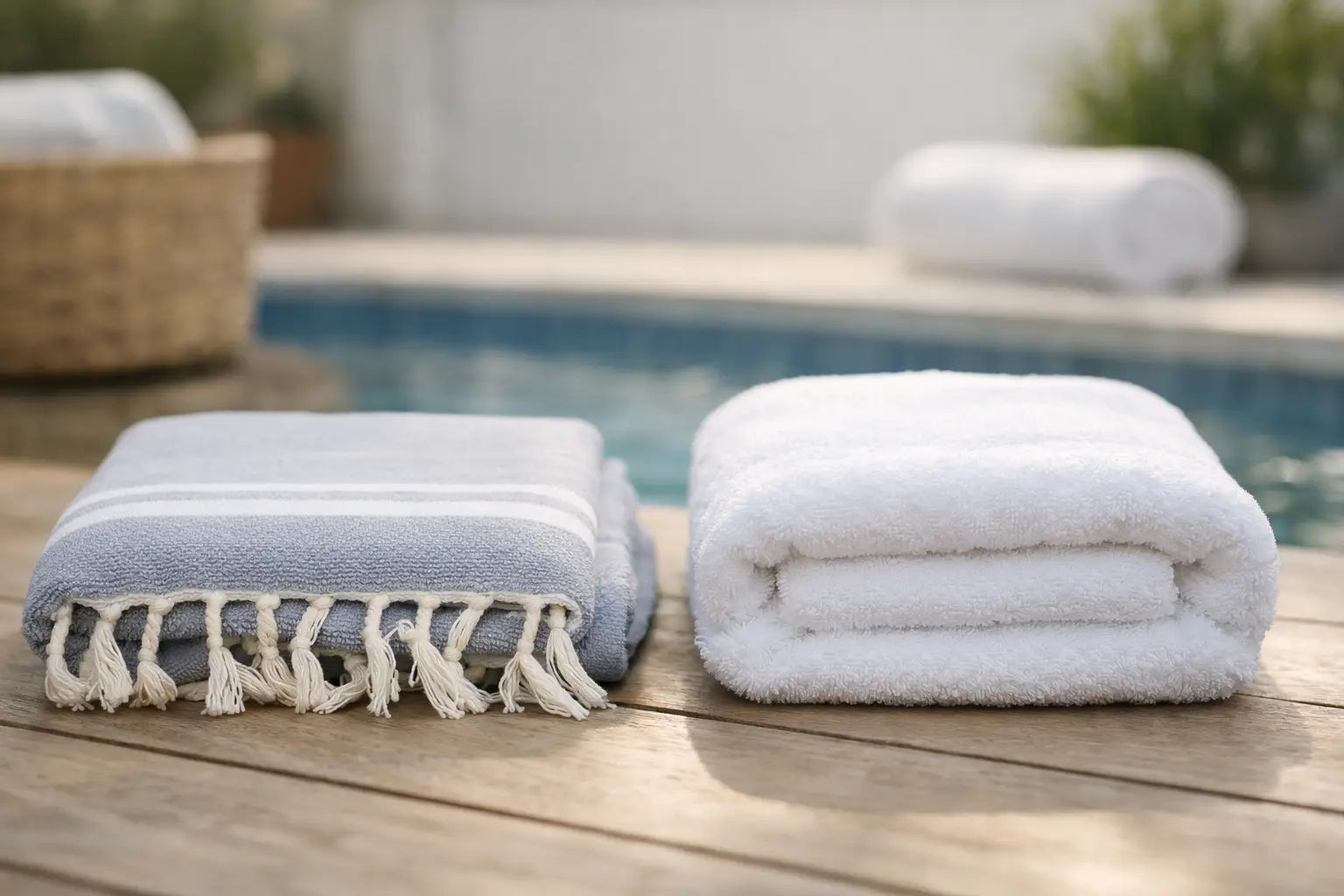
There is a particular disappointment in a beautiful bathroom spoiled by bulky, damp towels that never quite dry. For homes shaped with intention, textiles matter as much as stone, brass or lighting. That is why the question of peshtemal vs terry towel is not simply practical - it is aesthetic, tactile and deeply tied to how a space feels every day.
A towel lives in full view. It hangs by the bath, rests beside the pool, travels to the beach house, folds into a guest basket and often becomes part of the visual language of a room. Choosing between a peshtemal and a traditional terry towel is therefore less about trend and more about lifestyle, ritual and taste.
Peshtemal vs terry towel: the real difference
A peshtemal, sometimes called a Turkish towel, is a flat-woven cotton textile with roots in the hammam tradition. It is typically lighter, smoother and more refined in profile than the familiar terry towel, which is woven with looped piles designed to maximise plushness and absorbency.
The difference is immediate in the hand. A terry towel feels thick, cushioned and cocooning. A peshtemal feels crisp at first, then increasingly supple with use. One offers volume and softness from the outset. The other offers elegance, versatility and a kind of quiet luxury that reveals itself over time.
For a design-conscious home, this distinction matters. Terry towels tend to read as functional. A well-made peshtemal, especially in nuanced stripes or subtle natural tones, reads as curated.
When a peshtemal feels like the better choice
If your bathroom leans Mediterranean, minimal or softly layered, a peshtemal often sits more naturally within the space. It drapes beautifully, folds into a neat rectangle and never looks visually heavy. In smaller bathrooms, cloakrooms or guest spaces, that lightness can transform the atmosphere. The room feels calmer, less crowded and more considered.
Practicality is part of the appeal. A peshtemal dries quickly, which makes it especially useful in humid homes, busy family settings, spa areas and holiday properties where towels are washed and reused often. Because it is thin, it also stores with remarkable ease. A linen cupboard that holds six terry towels may hold far more peshtemals without feeling overstuffed.
Then there is versatility. A peshtemal can move beyond the bathroom with complete ease. It works as a beach towel, sauna wrap, travel companion, poolside throw or even an informal table covering in relaxed summer settings. For those who value beautiful objects that earn their keep, this flexibility is part of its charm.
Yet there is a caveat. If you love the immediate embrace of a deeply fluffy towel after a winter bath, a peshtemal may feel too spare. Its luxury is less about padding and more about material intelligence, craftsmanship and graceful use.
The sensory appeal of artisan weaving
Not all peshtemals are equal. The finest versions are woven from quality cotton with a balance of softness, strength and absorbency that improves after laundering. Their beauty lies in restraint - clean selvedges, balanced proportions, elegant fringe and colours that sit softly against plaster walls, marble basins and natural wood.
This is where artisan production changes the experience. A peshtemal made with care carries the subtle irregularities and integrity of the hand behind it. It does not shout for attention, but it elevates the room all the same.
Where the terry towel still wins
There are moments when only terry will do. A classic terry towel remains the instinctive choice for those who prioritise maximum absorbency and a fuller, more enveloping feel. For children, for everyday post-shower comfort, or for anyone who associates luxury with softness you can sink into, terry has obvious strengths.
It is also familiar. Guests know exactly what to expect from it. In a family home with a high turnover of laundry and little patience for textile nuance, terry can feel reassuringly straightforward.
Thicker terry towels are particularly welcome in colder months. They hold warmth well and deliver that indulgent hotel-style sensation many people still prefer. In a principal bathroom designed around comfort, rather than visual lightness, a generously weighted terry towel can make perfect sense.
But terry has compromises. It takes longer to dry, occupies more storage space and can become heavy after use. In bathrooms with limited ventilation, that slower drying time is not a minor detail. It affects freshness, maintenance and the overall sense of ease.
Which dries better, and which lives better?
This is where the answer becomes more nuanced than many buying guides suggest. A terry towel usually feels more absorbent in the immediate sense because of its loops and density. It drinks in moisture quickly and gives that familiar plush contact against the skin.
A peshtemal, however, often lives better over time. It dries faster between uses, is easier to wash, and tends to remain fresher in climates or homes where dampness lingers. For frequent travellers, gym use, pool bags or summer houses, that advantage becomes decisive.
So the better question is not only which towel dries you, but which towel suits the rhythm of your home. If your priorities are speed, softness and traditional comfort, terry may remain your favourite. If you care about elegance, practicality and a lighter visual footprint, the peshtemal often proves the more intelligent choice.
Peshtemal vs terry towel in a well-designed home
In refined interiors, textiles should support the architecture rather than compete with it. This is one reason peshtemals have become so beloved in homes with a coastal, European or quietly luxurious sensibility. They bring texture without bulk and pattern without noise.
A striped peshtemal in chalk, sand or faded blue can echo the palette of sea-worn stone, limewashed walls and sun-bleached wood. It contributes to an atmosphere rather than interrupting it. Terry towels, by contrast, tend to create visual mass. In the right bathroom that can feel sumptuous, but in a more edited space it can also feel dense.
For guest bathrooms, peshtemals are especially persuasive. They communicate thoughtfulness and taste. They feel slightly unexpected, and that small note of distinction lingers. The guest may not speak about the towel directly, but they will remember how polished the room felt.
This is part of the Casa Serena approach to home - objects should serve beautifully, but they should also shape mood and memory.
Care and longevity
Both towel types can last well if properly made, but they age differently. A quality peshtemal often softens and improves in character with every wash. It becomes more fluid, more personal and more at ease in the home. Terry towels are more vulnerable to stiffness, flattened pile and that tired heaviness that arrives when fibres lose resilience.
Washing habits matter. Overuse of fabric conditioner can reduce absorbency in both, though terry suffers noticeably when residue builds in the loops. Peshtemals are usually simpler to care for and less demanding to dry, which quietly extends their everyday appeal.
So which should you choose?
If you want one answer for every household, there is none. The right choice depends on what you value most.
Choose a peshtemal if you prefer understated luxury, travel often, want faster drying, need easier storage or care deeply about how towels look within the room. It is particularly well suited to elegant guest bathrooms, spa-like spaces, beach houses and interiors where every detail is expected to feel light but intentional.
Choose a terry towel if your priority is plush comfort, cocooning softness and the familiar generosity of a classic bath towel. It suits colder settings, family routines and bathrooms where comfort outweighs visual restraint.
Many of the most considered homes keep both. Peshtemals for summer, guests, travel and display. Terry towels for deep winter baths and those moments when softness matters more than silhouette. This is often the most luxurious answer of all - not choosing one camp, but choosing well for each occasion.
A towel may seem like a modest decision, yet it touches the skin, the eye and the rhythm of the day. Select the one that reflects how you want your home to feel - airy and effortless, or plush and embracing - and the bathroom becomes more than functional. It becomes quietly unforgettable.


