


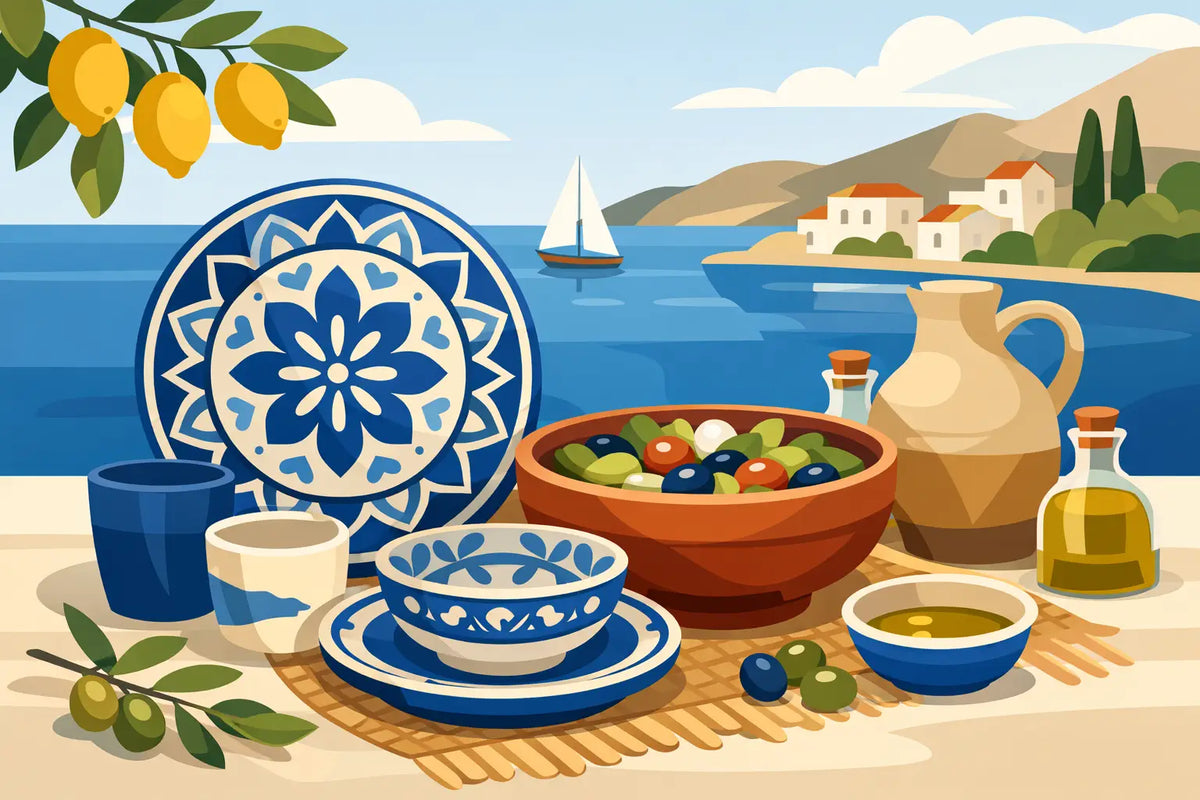
A table set with handmade tableware doesn't need grand embellishments to make an impression. The slightly irregular edge of a plate, the deep luster of a glaze, or the hand-painted design that reveals the presence of its creator are enough. In these small gestures lies an essential difference: eating ceases to be a routine and becomes an intimate, beautiful, and deliberate scene.
For those who understand the home as an extension of their identity, tableware is not a functional detail hidden in a cupboard. It is an aesthetic choice that welcomes, accompanies, and endures. And when it comes from a living ceramic tradition, such as that of Anatolian workshops, it is also a way of bringing centuries of craftsmanship, color, and memory to the table.
Why choose handmade tableware
Industrial production seeks identical perfection. Craftsmanship, however, honors variation. A brushstroke can be more intense on one plate than on another; a shade of blue can reveal different nuances under the morning light and during a long dinner. Far from being defects, these singularities are the signature of a piece made with time.
This difference is perceived by touch even before the food is served. Handmade ceramics possess weight, texture, and a presence that transforms the composition of the table. They don't compete with food or conversation: they provide a more generous framework. Ivory enamel bowls can turn an everyday meal into a serene ritual; a cobalt blue decorated platter can be the centerpiece of a summer table without needing anything else.
There is also a deeper reason. Choosing objects created in artisan workshops means preferring provenance over repetition. What others call decoration, we call legacy. Each piece speaks of a transmitted technique, of a worked material, and of a specific place. This narrative is not mass-produced.
The Turkish heritage that transforms the table
Ottoman-inspired ceramics have an extraordinary relationship with color and ornamentation. Their floral motifs, stylized tulips, saz leaves, and delicate geometries were not born to be mere ornaments. They are part of a visual language linked to the architecture, textiles, and hospitality rituals of Turkey.
In a contemporary table setting, this heritage can be interpreted with great freedom. A porcelain plate with Iznik decoration brings intensity and sophistication to a minimalist dining room. An earthenware collection in mineral greens, terracottas, and off-whites naturally dialogues with washed linen, light wood, and clear glass. The key is not to reproduce a historical scene, but to allow the origin of the piece to add depth to a modern setting.
Casa Serena Interiores selects these types of objects for their ability to unite two worlds that should not be separated: artisan heritage and daily life. An Anatolian platter doesn't have to be reserved for an exceptional occasion. It can hold figs, freshly cut bread, or a shared salad on any given Tuesday. The most compelling luxury is that which is used.
How to build a table with character
Start with a foundation that stands the test of time
The basis of a good collection is often tableware in neutral tones, but neutral doesn't mean impersonal. Warm white, cream, sand, stone gray, or ivory enamel allow the form and material to be the protagonists. These colors suit any season and can coexist with patterned textiles, wild flowers, or antique cutlery.
If you want a versatile table, choose dinner plates and deep plates from the same family, even if they are not identical. Then, incorporate dessert plates, bowls, or platters with more expressive decoration. This structure allows for creating calm tables for everyday use and more theatrical compositions for guests, without accumulating meaningless pieces.
Add color with intention, not excess
Turkish ceramics invite color, but a refined table knows how to moderate it. If the main plate features a dense floral pattern in blue and red, it should be accompanied by a plain linen napkin and simple glasses. If the tableware is sober, you can opt for a more exuberant centerpiece, seasonal fruits, or a textured tablecloth.
Cobalt blue is especially versatile because it dialogues with almost everything: white, brass, wood, rattan, and botanical greens. Pomegranate and coral tones add warmth to colder months. Turquoise, meanwhile, introduces an aquatic luminosity that is ideal for terraces, sun-drenched dining rooms, and summer tables.
Not all elements need to belong to the same collection. In fact, an overly coordinated table can lose personality. Combining handmade pieces requires a common vision: repeat one or two colors, a texture, or a formal gesture. This way, the mix feels curated and not accidental.
Give space to the main pieces
Some objects demand to be contemplated. A large hand-painted ceramic platter can become the center of the table, even empty, or hold a composition of lemons, pomegranates, and olive branches. A set of small bowls can serve appetizers, olives, or spices, but also create visual rhythm along a tablecloth.
Scale matters. On a small table, an expressive presentation plate and an appetizer bowl are enough to introduce character. On a large table, a combination of platters, shared plates, and pitchers allows for building a more generous scene. The goal is not to fill every inch, but to make each element seem to have found its natural place.
Materials that age beautifully
Earthenware, glazed ceramic, and porcelain offer distinct sensations. Earthenware usually has a more earthy and warm presence, very suitable for relaxed and Mediterranean tables. Porcelain brings delicacy, luminosity, and a more precise elegance. Glazed ceramic, depending on its finish, can move between both: it is expressive, resistant, and especially rich in color nuances.
There is no universally superior material. It depends on how you live in your home. For intense daily use, it's worth considering pieces with good thickness, well-fired glazes, and easy-to-stack formats. For formal dinners or celebratory collections, decorated porcelain can offer a more ceremonial presence. Ideally, tableware should be beautiful, yes, but also invite fearless use.
It should be assumed that handmade pieces may show slight variations in design, glaze, or diameter. This is precisely their beauty. Craftsmanship does not promise mechanical uniformity, but rather consistency, quality, and character.
The art of mixing antique and contemporary tableware
One of the most personal tables arises from the contrast between eras. An Ottoman plate with floral inspiration can coexist with modern-lined crystal glasses. An artisanal platter looks magnificent on a plain linen tablecloth, alongside polished steel cutlery or soft gold-finished cutlery. The tension between the old and the contemporary allows both worlds to breathe better.
You can also mix family heirlooms with new acquisitions. An inherited porcelain service comes alive when accompanied by hand-painted Turkish bowls. An artisanal plate, in turn, becomes even more special when used with cutlery that has accompanied celebrations for years. A refined home is not built all at once: it is composed layer by layer, with objects that remind us where we come from and express where we are going.
Care to preserve beauty
Handmade tableware deserves careful, but not complicated, care. Wash delicate pieces with mild detergents and avoid abrasive scourers that can dull the glaze. If a piece incorporates metallic details, very fine paint, or a particularly lustrous finish, hand washing is the most prudent option.
When storing, place felt or linen separators between more decorated plates to preserve their surface. Avoid sudden temperature changes, especially when transferring a piece from the refrigerator to the oven or to very hot water. And remember that a crack or a slight mark of use does not always detract from value: in certain objects, patina is the most beautiful evidence of a life well shared.
The best table is not the one waiting impeccably for a special occasion. It is the one prepared with intention for a simple dinner, a slow breakfast, or a conversation that lingers without watching the clock. Choose pieces that make you want to bring out the tablecloth, serve something good, and gather those who matter.


